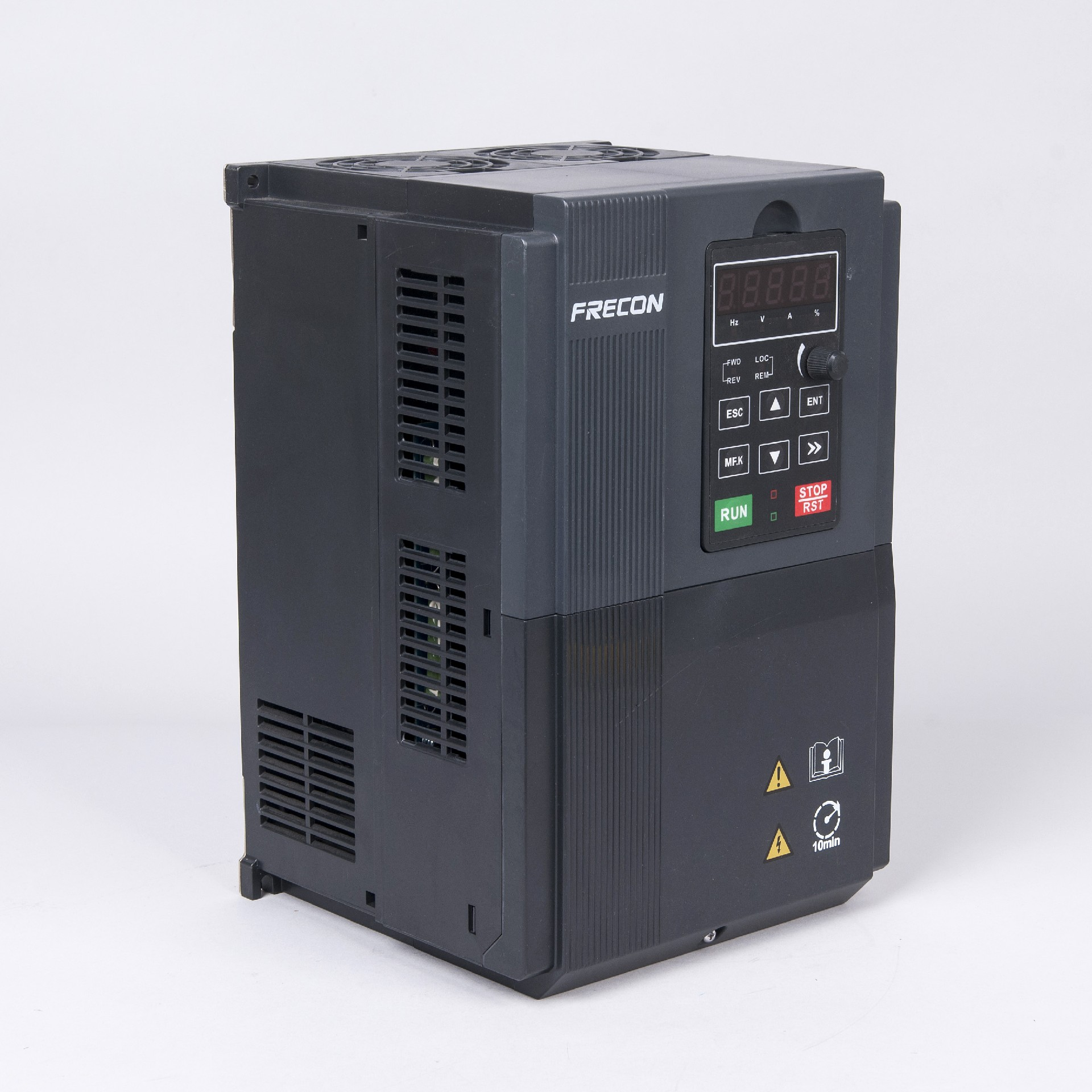
Access to reliable water pumping in remote areas often depends on solar energy, yet setting up the electronic control system correctly remains a challenge for many installers and system integrators. A properly configured solar pump inverter transforms sunlight into usable pumping power, while a poorly configured one leads to frequent shutdowns, motor damage, or inefficient water delivery. As a manufacturer of solar pumping inverter systems, FRECON brings over ten years of power conversion expertise to this task. Our PV500 Series water pump solar inverter is a high-performance inverter designed for demanding industrial applications. With more than 40 patents and full EMC/CE compliance, we help customers move from panel installation to reliable pumping in a structured way.
Step 1: Matching the Inverter to Your Pump and Panels
Before any wiring begins, proper sizing determines long-term success. The solar pump invertermust match both the motor rating and the solar array capacity. Our PV500 Series supports both asynchronous and permanent magnet synchronous motors, offering precise speed and torque control. First, confirm your pump motor's rated voltage, current, and frequency. Then, calculate the solar array's open-circuit voltage—it must stay below the inverter's maximum input rating. As a rule, we recommend array oversizing by 20–30% to account for cloudy days. The solar pumping inverter should also have a wide MPPT voltage range. FRECON's design accommodates fluctuating solar conditions without frequent tripping.
Step 2: Configuring Motor Parameters and Control Modes
Once connected, the most critical configuration step involves motor parameter tuning. Our solar pump inverter includes an auto-tuning function that measures stator resistance, leakage inductance, and no-load current. For permanent magnet synchronous motors, additional rotor position detection is required. With advanced motor control algorithms and wide adaptability, the FRECON solar water pump inverter ensures stable and efficient operation across heavy-duty environments such as hoists, cranes, and textile machinery—so pumping applications benefit from the same robust control. Set the control mode to sensorless vector for most centrifugal pumps, or V/f control for submersible pumps with long cables. We also recommend programming the sleep and wake-up levels. When solar irradiance drops, the drive should enter sleep mode to prevent stalling; when panels recover, it should automatically restart.
Step 3: Testing and Dry-Run Protection
Before full deployment, test the solar pumping inverter under partial panel shading and low-irradiance mornings. Our PV500 Series includes dry-run protection that stops the pump when water level drops below a sensor threshold. Configure this hysteresis properly to avoid rapid cycling. Additionally, set the ramp-up time to match the pump's hydraulic characteristics—too fast causes cavitation, too slow wastes available solar power.
Achieving Reliable Solar-Powered Pumping
Setting up a solar pumping inverter does not need to be complicated, but each step from sizing to auto-tuning deserves attention. FRECON's PV500 Series combines asynchronous and PMSM support, wide environmental adaptability, and rugged construction for demanding locations. Contact our technical team for configuration templates or remote assistance. Let us help you turn sunlight into steady water flow with a solar pump inverter built to last.