Laboratories depend on instruments that can be affected by unstable electrical conditions, unexpected outages, or poor waveform quality. Analytical equipment, computers, monitoring systems, and other precision loads may require carefully controlled power to maintain reliable operation and protect ongoing work. For facility managers, engineers, and procurement teams, selecting suitable solar inverter solutions therefore requires more than comparing rated power. Waveform quality, backup architecture, load compatibility, and system integration all deserve careful evaluation.
Why Pure Sine Wave Output Matters in Laboratories
Pure sine wave output is an important consideration for sensitive electronic equipment. Eaton explains that pure sine wave power provides strong compatibility with sensitive equipment, while some devices require it to operate correctly. Online UPS systems continuously generate their AC output through an inverter, helping isolate connected equipment from disturbances on the incoming line.
Laboratory users should also distinguish between power generation and backup power protection. A solar inverter does not automatically provide uninterrupted backup for every laboratory load. The system must be designed around the required energy source, battery arrangement, transfer behavior, output characteristics, and critical-load requirements.
For equipment where even a short interruption could affect an experiment or measurement, an online UPS or another appropriately engineered backup architecture may be more suitable. Laboratory power systems should therefore be evaluated as complete solutions rather than by inverter waveform alone.
What to Evaluate in Solar Inverter Solutions
Power quality should be the starting point. Engineers should review the inverter's output waveform, voltage regulation, frequency stability, harmonic performance, and compatibility with the connected equipment. These parameters become particularly important when a facility operates precision instruments alongside computers, pumps, HVAC equipment, or other electrical loads.
Load sizing is equally important. A laboratory's connected load is rarely constant, and some equipment may produce short-duration startup currents. Engineers should account for continuous operating demand as well as transient requirements when specifying an inverter and associated backup equipment.
The energy-storage strategy also deserves attention. Battery capacity determines how long critical loads can remain powered when solar generation or utility power is unavailable. If long backup duration is required, the battery system, charging strategy, inverter capacity, and expected operating profile must be considered together.
Backup Architecture Is as Important as the Inverter
A reliable laboratory power system should separate critical loads from non-critical loads whenever practical. Sensitive analytical instruments, control systems, data equipment, and monitoring devices may require a higher level of power protection than lighting or general-purpose loads.
Double-conversion UPS technology illustrates this principle. Such systems continuously convert incoming AC to DC and then back to AC, allowing the inverter to provide the load with regenerated power. This approach can help isolate equipment from voltage disturbances, frequency variations, electrical noise, and other utility-side problems.
Solar generation can complement this architecture, but the actual system design should reflect the laboratory's operational priorities. A solar inverter designed primarily for water pumping, for example, should not automatically be presented as a laboratory backup inverter simply because it accepts photovoltaic input.
Understanding FRECON's PV150A Series
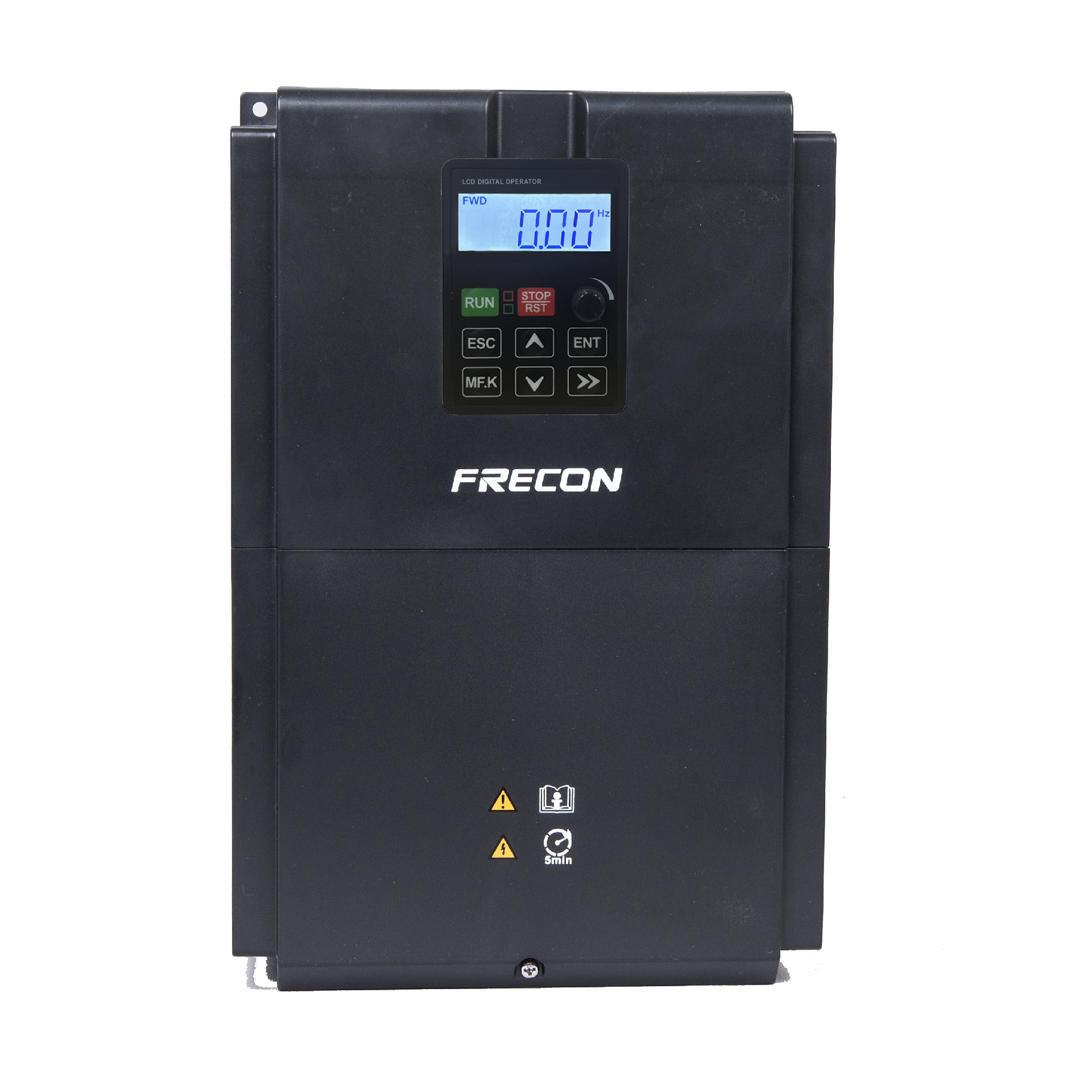
At FRECON, we develop solar and power-conversion technologies for industrial applications. Our PV150A Series Solar Water Pump Inverter is specifically designed as an advanced MPPT VFD for solar pumping rather than as a dedicated laboratory backup inverter. This distinction is important when engineers evaluate our products for an application.
The PV150A supports asynchronous pumps, synchronous pumps, and BLDC motors. Its official product information specifies an optimized MPPT algorithm with efficiency above 99%, DC/AC power input compatibility, automatic switching between DC and AC sources, battery-free operation, and multiple protection functions.
The series also provides protection against overcurrent, overvoltage, output phase loss, undervoltage, short circuit, and overheating. It can automatically enter dormancy when sunlight is weak and resume operation when sunlight becomes stronger. These functions are valuable for unattended solar pumping applications where operating conditions change throughout the day.
Where the PV150A Fits in Industrial Solar Projects
The PV150A's specifications make it particularly relevant to water-pumping systems rather than precision laboratory backup. Depending on the model, the series supports DC input ranges of 70–450 V or 230–800 V, with corresponding AC input and three-phase AC output configurations. The listed motor power range spans from 0.4 kW upward across the series, including substantially larger models.
Its hybrid supply capability can be useful where solar availability varies. The inverter can accept DC solar power and AC grid power and automatically switch between them. For industrial facilities that use solar pumping alongside other infrastructure, this can help maintain water-supply continuity without requiring batteries for the pumping application.
For laboratory projects, however, we recommend that engineering teams verify whether the selected FRECON product is specifically suited to the required load and backup architecture. Our broader portfolio includes dedicated off-grid solar inverter products, so application matching should come before model selection.
How to Select a Solar Inverter Manufacturer
When evaluating a solar inverter manufacturer, business buyers should look beyond nominal efficiency. Technical documentation, application experience, protection functions, available power ranges, certifications, commissioning support, and long-term product availability can all influence project risk.
At FRECON, our product portfolio covers applications including solar pumping, off-grid solar power, industrial drives, and other power-conversion requirements. Our official product range includes the SP500 Series Off-Grid Solar Inverter and other solar inverter families in addition to the PV150A series.
We believe this application-based approach is more practical for engineering procurement teams. Instead of selecting a product solely because it is described as a “pure sine wave” inverter, buyers should match the inverter topology, output characteristics, energy storage, load profile, and backup requirements to the actual laboratory system.
Building a More Reliable Laboratory Power Strategy
Sensitive laboratory equipment requires a carefully engineered electrical environment. Pure sine wave output can provide important compatibility benefits, but it is only one part of a dependable backup strategy. UPS topology, battery autonomy, load segregation, voltage regulation, and system controls also need to be considered.
At FRECON, we approach solar inverter solutions from an application perspective. While our PV150A Series is purpose-built for solar water pumping, its documented MPPT efficiency, hybrid DC/AC input, automatic switching, protection functions, and battery-free operation demonstrate the type of engineering capabilities we apply to solar power conversion. For laboratory projects, we encourage business customers to select the FRECON solution that precisely matches their required power architecture, rather than adapting a pumping inverter beyond its intended application.