Large agricultural operations need pumping systems that can deliver consistent water while controlling energy costs and simplifying maintenance. For projects that cover extensive fields, orchards, greenhouses, or irrigation networks, three-phase pumping equipment can provide the power and control needed for demanding applications. We look beyond rated power alone when selecting a solar pump inverter, considering motor compatibility, solar availability, water requirements, protection, and overall system efficiency.
What Large Farms Need from a Solar Pump Inverter
A commercial irrigation project typically operates under conditions that are very different from a small residential water system. Pumps may need to run for extended periods, move large volumes of water, and respond to changing sunlight throughout the day. The inverter therefore needs to manage variable photovoltaic input while maintaining suitable motor operation.
We recommend evaluating the complete pumping system before choosing equipment. Pump head, required flow, motor type, available PV capacity, and daily irrigation demand should all influence the selection. A correctly matched solar pump inverter can help convert available solar energy into useful pumping power without requiring a battery-based architecture.
Why Three-Phase Pumping Fits Agricultural Applications
Three-phase motors are widely used for higher-power industrial and agricultural equipment because they are well suited to continuous-duty applications. For large irrigation installations, three-phase operation can support powerful pumps while providing the control flexibility required by demanding water-distribution systems.
Asolar pump for agriculture also needs to handle variable operating conditions. Solar generation changes according to irradiance, weather, and time of day. Instead of treating photovoltaic power as a constant source, the inverter should dynamically manage the available energy and adjust motor operation accordingly.
MPPT Helps Maximize Available Solar Power
Maximum Power Point Tracking is one of the most important functions to consider when evaluating a solar pumping system. Photovoltaic panels have a changing maximum power point, so the voltage and current combination that produces the most useful power can vary as environmental conditions change.
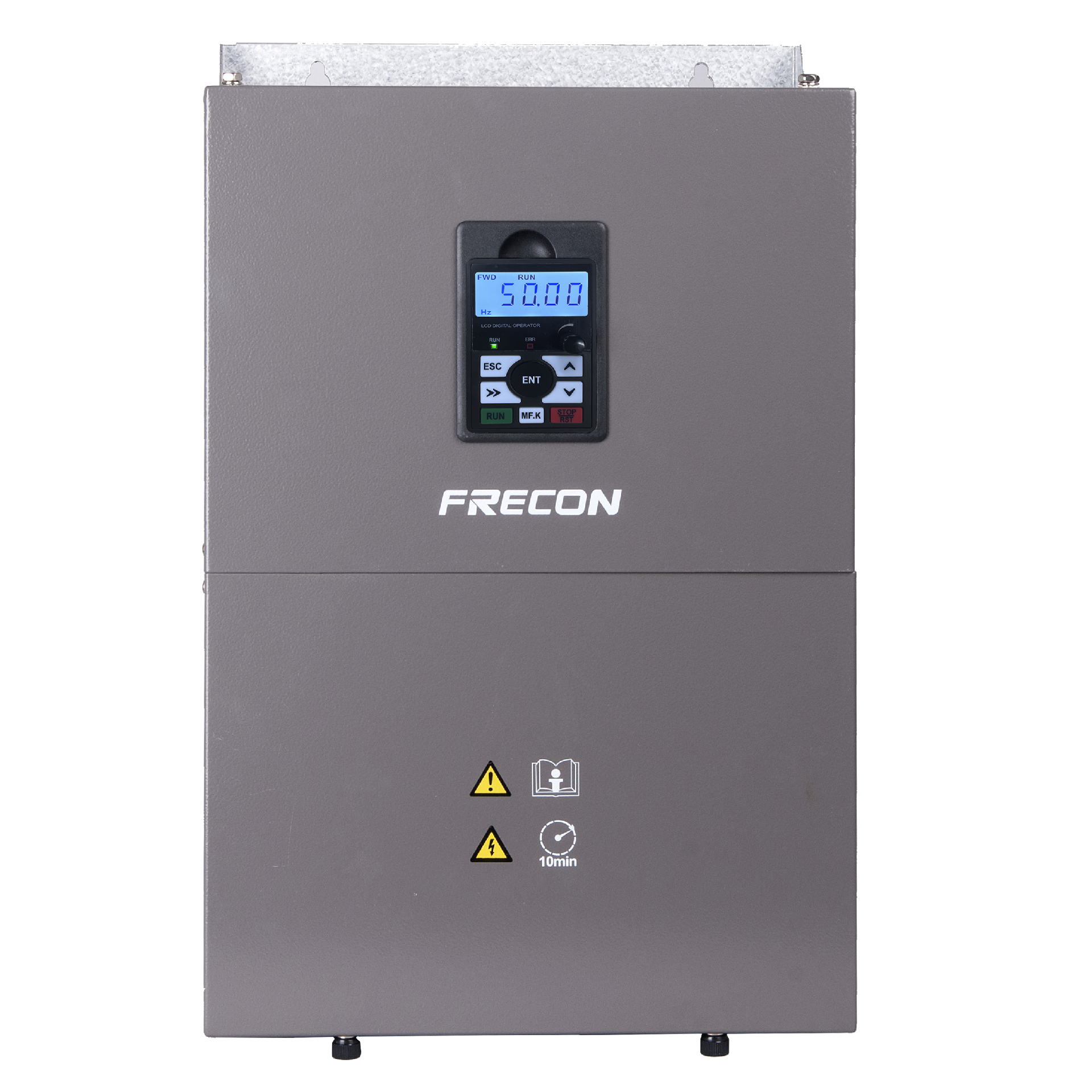
We use advanced MPPT algorithms in our PV150A Series Solar Water Pump Inverter to continuously track available photovoltaic power. The series is specified with an efficiency of up to 99%, helping agricultural projects make effective use of the solar energy available to the pumping system.
For large farms, this capability is particularly valuable because irrigation demand and solar production do not always remain constant. Effective MPPT control allows the pumping system to respond to these changes rather than relying on a fixed operating point.
Motor Compatibility Should Be a Selection Priority
Agricultural pumping projects do not all use the same motor technology. Selecting an inverter that supports different motor types can therefore give project engineers greater flexibility when designing or upgrading irrigation equipment.
Our PV150A Series is designed for several motor types, including AM, PMSM, and BLDC motors. This broad compatibility can help system integrators match the inverter with different pump configurations instead of limiting a project to one motor architecture.
We also consider wiring requirements during system design. The PV150A Series supports multiple wiring configurations, helping accommodate different industrial application needs. Checking the motor and wiring configuration before commissioning remains essential for achieving reliable operation.
Battery-Free Operation Can Simplify System Design
Large-scale agricultural pumping does not necessarily require batteries. When irrigation can be scheduled around solar availability, direct solar-powered pumping can reduce the number of components in the energy system and simplify installation requirements.
Our PV150A Series supports operation without a battery and provides a stable hybrid supply. This approach can be useful for agricultural sites where the primary objective is to use available solar energy directly for water pumping rather than storing electricity for later use.
A battery-free architecture can also reduce the maintenance considerations associated with energy storage. However, project engineers should still assess irrigation schedules, water-storage capacity, grid availability, and local operating conditions before deciding whether battery-free operation is appropriate.
Built-In Protection Supports Long-Term Pump Operation
Agricultural pumping equipment may operate in dusty, hot, remote, or otherwise demanding environments. Protection functions are therefore important when evaluating a solar pump inverter for commercial use. The inverter should help protect the motor and power-conversion system against abnormal operating conditions.
The PV150A Series incorporates built-in protection as part of its design. Combined with its MPPT control and hybrid supply capability, this helps create a more complete pumping solution for agricultural applications.
We also recommend considering maintenance access during project planning. Equipment installed at a remote irrigation station should be straightforward for technical teams to inspect and manage. Proper installation, electrical protection, grounding, and pump selection remain essential regardless of inverter features.
Selecting a Solar Pump for Agriculture System
Choosing a solar pump for agriculture requires more than comparing inverter efficiency figures. We first establish the required water flow and total head, then identify the pump and motor characteristics. The photovoltaic array must subsequently be matched with the inverter's operating requirements.
For large-scale projects, we also evaluate whether the system needs hybrid power, whether batteries are necessary, and how irrigation schedules correspond with solar production. These considerations help prevent an inverter from being selected in isolation from the rest of the pumping system.
Our PV150A Series provides a practical combination of advanced MPPT control, up to 99% efficiency, battery-free operation, stable hybrid supply, built-in protection, and compatibility with AM, PMSM, and BLDC motors. These features make it suitable for system integrators evaluating flexible solar pumping solutions.
Building a More Efficient Agricultural Pumping System
Large agricultural projects require pumping equipment that can balance performance, energy availability, motor requirements, and operational reliability. A properly selected solar pump inverter can play a central role by managing photovoltaic power and coordinating it with pump operation.
We designed the FRECON PV150A Series as an advanced MPPT VFD solar pump inverter for diverse pumping applications. Its support for multiple motor types, advanced MPPT algorithms, 99% efficiency, stable hybrid supply, built-in protection, and no-battery operation gives agricultural project designers several practical configuration options.
For businesses planning large irrigation installations, the best solution is ultimately the one that matches the complete application. By evaluating water demand, pump characteristics, solar resources, motor compatibility, and operating conditions together, we can develop a solar-powered pumping system that supports efficient and dependable agricultural water management.