Automated packaging lines combine conveyors, feeders, sealing units, filling mechanisms, cutters, and other moving equipment that may operate at high speed. Operators and maintenance personnel can face risks when they enter guarded areas for inspection, cleaning, adjustment, or troubleshooting. A properly designed STO inverter can contribute to a safer machine architecture by removing torque-producing energy from the motor when a safety function is activated. For machine builders, this makes drive-based safety an important consideration alongside productivity and motion performance.
Understanding the Role of an STO Inverter
Safe Torque Off, or STO, is a drive-integrated safety function designed to prevent the motor from producing torque. IEC 61800-5-2 establishes requirements for safety-related power drive systems and their functional safety considerations. STO is one of the safety sub-functions that can be implemented within a suitable variable-speed drive system.
When STO is activated, the drive suppresses the signals responsible for generating motor torque. The motor therefore cannot be electrically driven by the inverter. Siemens describes STO as a function that prevents unintended motor starts and puts the drive into a torque-free state.
This distinction matters on packaging equipment. STO does not necessarily mean that a rotating motor stops immediately. If the motor is already moving, it may coast to a standstill depending on the machine's mechanical characteristics. Therefore, engineers must assess stopping time, inertia, braking requirements, and residual movement when designing the complete safety system.
Where STO Protects Operators on Packaging Lines
Packaging machines frequently require access to areas containing moving components. Operators may need to clear material, inspect product flow, replace packaging film, or perform maintenance. If the machine can restart unexpectedly during these activities, the consequences can be serious.
An STO inverter can provide an important layer of protection by preventing the drive from supplying torque to the motor after the safety function is triggered. Siemens identifies packaging machines among applications where integrated drive safety functions can be used to support machine protection.
The function can be particularly valuable for motors driving conveyors, rollers, feeders, or other continuously moving mechanisms. When a safety-related signal activates STO, the corresponding drive is placed into a torque-free condition rather than relying solely on conventional control commands to stop operation.
However, STO should not be treated as a complete machine-safety system. ISO 13849-1 addresses the design and integration of safety-related parts of control systems, while ISO 13850 establishes principles for emergency-stop functions. The required safety architecture depends on the specific machine hazards and risk assessment.
STO Versus a Normal Stop Command
A standard stop command and STO serve different purposes. A normal stop typically tells the drive's control system to reduce speed according to programmed deceleration parameters. The drive remains capable of producing torque during this process.
STO instead addresses the prevention of torque generation. This makes it suitable for safety situations where preventing an unintended motor start is more important than maintaining controlled deceleration through the drive.
For packaging-machine builders, this distinction can influence how emergency stops, guard switches, safety controllers, brakes, and drives are coordinated. If a load has significant inertia or can move because of gravity or another external force, additional safety measures may be required. Siemens specifically warns that STO itself does not provide galvanic isolation and that suitable measures may be necessary to prevent unwanted movement.
Combining STO with a Smart Electric Drive
Modern packaging equipment increasingly requires both safety and precise motion control. A smart electric drive can contribute to this objective by combining motor-control capabilities with integrated functions, diagnostics, parameter management, and communication.
The drive should therefore be evaluated as part of the machine's wider automation architecture. Engineers need to consider motor type, load characteristics, acceleration and deceleration requirements, speed-control accuracy, communication interfaces, fault protection, and safety functions together.
For automated packaging applications, this approach can help reduce unnecessary hardware complexity while providing machine builders with more coordinated control. Siemens notes that integrated safety functions can reduce the need for separate components and associated wiring compared with some conventional electromechanical approaches.
FRECON FR30 Series for High-Performance Drive Applications
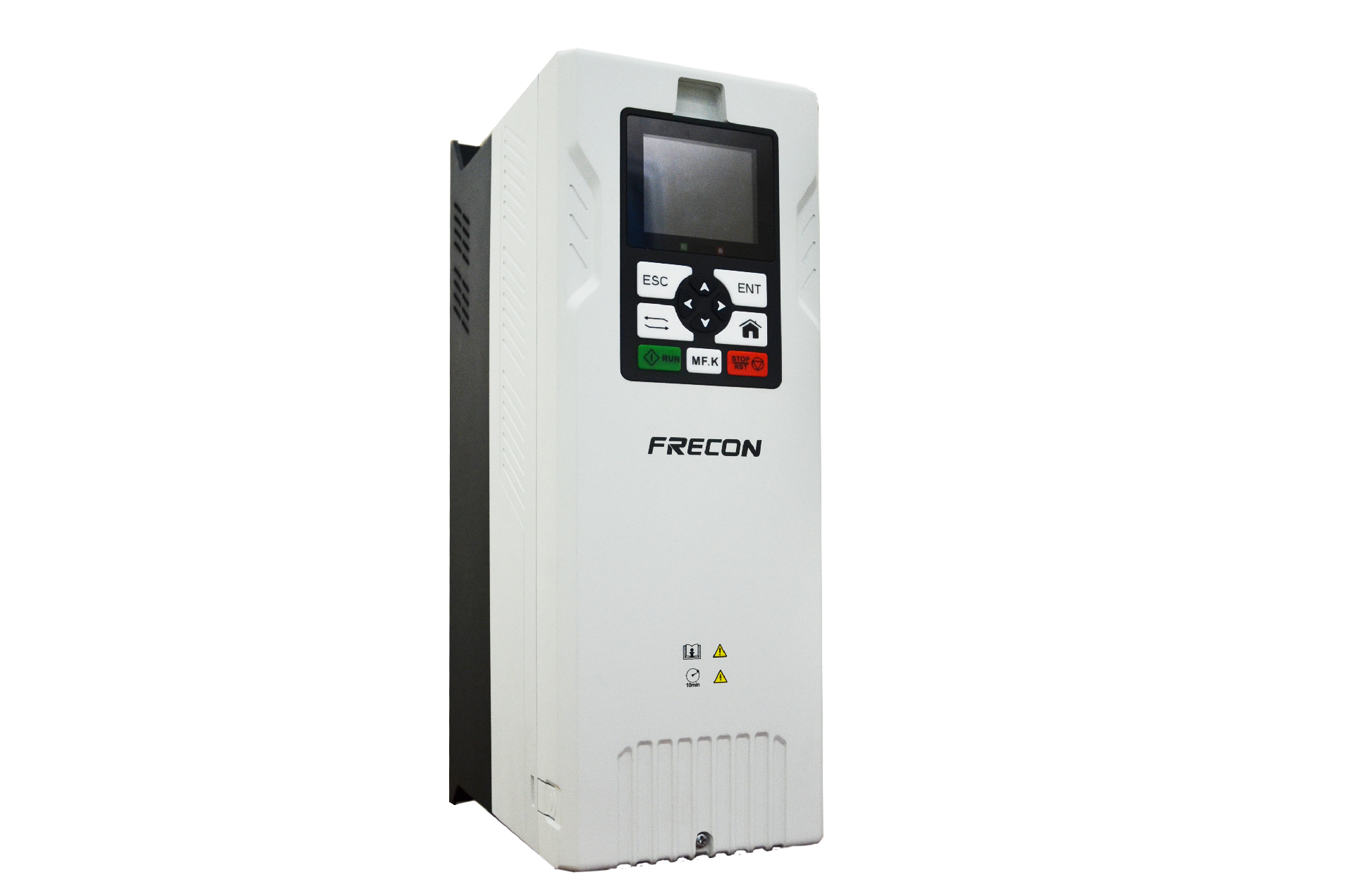
At FRECON, we develop variable-frequency drives for industrial applications where both motor performance and operational reliability matter. Our FR30 Series High Performance Inverter is designed with high performance, high quality, and high power density, making it suitable for demanding industrial drive applications.
The FR30 incorporates STO as a standard built-in function. According to our product information, this STO function is designed to to prevent torque generation in hazardous situations, helping prevent unintended motor starts. This makes the safety function particularly relevant when machine builders are developing drive architectures for automated equipment.
Beyond STO, the FR30 provides several drive-control capabilities. Its specifications include V/F control, two sensorless vector-control modes, and closed-loop vector control. Speed-control precision is specified at ±0.5% for V/F control, ±0.2% for sensorless vector control, and ±0.1% for closed-loop vector control. Torque response for sensorless vector control is specified at less than 10 ms.
The FR30 also supports acceleration and deceleration times from 0.0 to 6000.0 seconds, multiple protection functions, parameter backup for three sets of settings, and overload capability of 150% rated current for 60 seconds in heavy-duty operation.
Designing Safety into the Complete Machine
Selecting a drive with STO is only one step in developing a safe packaging line. Machine builders should first identify hazards and determine the required safety functions through an appropriate risk assessment. ISO 13849-1 emphasizes that safety-related control systems need to be designed and integrated according to the required application characteristics.
The safety circuit should then be coordinated with guards, emergency-stop devices, safety controllers, sensors, brakes, and other relevant components. Engineers should also verify the actual stopping behavior of each axis rather than assuming that STO produces an immediate mechanical stop.
At FRECON, we see the STO inverter as part of a broader approach to industrial motion safety. By combining built-in STO with high-performance motor control, the FR30 can give machine builders a practical drive platform to evaluate for automated packaging equipment. When correctly integrated into the overall safety architecture, a capable smart electric drive can help manufacturers pursue both dependable machine operation and stronger operator protection.