Reliable water pressure is a basic requirement for modern commercial buildings. Maintaining consistent pressure becomes more challenging as building height and water demand increase. Offices, hotels, shopping centers, and mixed-use properties can experience significant changes in water consumption throughout the day.
We need a water supply system that can respond to these changes without creating excessive pressure fluctuations. Proper pump selection, pressure sensing, and variable frequency drive control are therefore essential for maintaining constant water pressure.
Why High-Rise Buildings Need Better Pressure Control
Water pressure naturally changes according to elevation, flow demand, pipe resistance, and the configuration of the water distribution system. In a high-rise building, a single pressure setting may not provide suitable conditions across every floor. The upper floors can experience insufficient pressure, while excessive pressure can occur on lower floors.
For this reason, high-rise water systems are often divided into pressure zones. Grundfos explains that zoning helps prevent excessive pressure differences between floors, with booster arrangements configured according to the building's height and water distribution requirements.
Commercial buildings also experience highly variable demand. An office tower may have substantial consumption during working hours and much lower demand overnight. A hotel can have different peaks in the morning and evening. The pumping system therefore needs to adjust output instead of operating continuously at a fixed speed.
How Variable-Speed Pumping Maintains Constant Water Pressure
A variable frequency drive (VFD) adjusts motor speed according to system requirements. When demand increases, the pump can accelerate to provide additional flow. When demand decreases, the pump can slow down rather than continuing to operate at full speed.
This approach allows the water supply system to respond dynamically to pressure changes. Grundfos describes variable-speed constant-pressure pumping as a method for maintaining a pressure setpoint even when flow demand and inlet pressure vary.
The control process normally uses a pressure sensor to provide feedback. The controller compares the measured pressure with the target value and adjusts pump speed accordingly. FRECON's own constant-pressure water supply solution similarly describes pressure feedback and PID operation as the basis for automatically adjusting inverter output frequency and motor speed.
Choosing the Right Multi-Pump Configuration
One pump may not be sufficient for a large commercial building because water demand can vary substantially. A multi-pump system allows the available capacity to be increased or reduced according to actual demand.
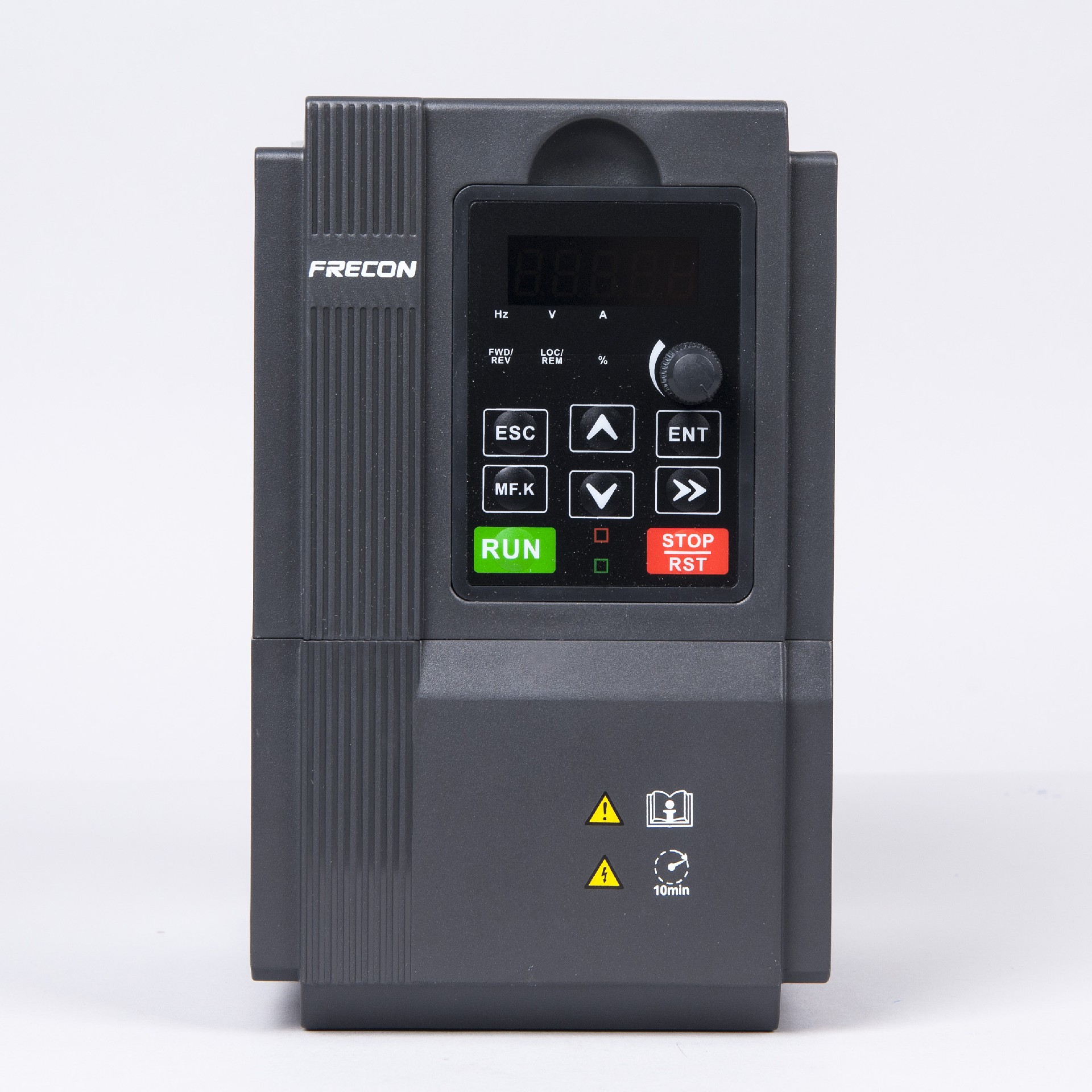
Our FR500H Series Special Purpose Inverter is specifically designed for multi-pump constant-pressure water supply. It supports four multi-pump control modes: single variable-frequency pump with multiple power-frequency pumps, variable- and power-frequency two-pump mode, multi-frequency following mode, and multi-master mode.
These configurations give system designers greater flexibility when matching the pumping arrangement to a building's capacity requirements. The FR500H documentation also describes multi-follower and multi-master operation for systems controlling up to eight variable-speed pumps.
Preventing Pressure Overshoot During Startup
Maintaining pressure after a system has stabilized is only part of the challenge. Startup can also cause undesirable pressure fluctuations, particularly when pumps begin operating suddenly and the piping system has not yet reached a stable condition.
Our FR500H addresses this issue with a pipe pressure filling function. The system can slowly run the pipe before beginning PID pressure adjustment, helping prevent pressure overshoot during startup.
This function is particularly relevant to high-rise installations because long vertical pipe networks can require careful pressure management. A controlled pressure build-up can help reduce abrupt changes in the water system and support smoother operation.
Balancing Pump Operation and Equipment Reliability
A multi-pump system should not simply start every available pump whenever demand changes. Unnecessary pump operation can increase energy consumption and operating hours, while repeatedly relying on the same pump can create uneven equipment wear.
Our product supports multiple pump rotation modes, including fixed sequence, first-start-first-stop, and timing rotation. These functions are designed to prevent a single pump from operating continuously for an excessive period.
The FR500H also supports pressure sleep and wake-up functions. When demand becomes sufficiently low, the system can enter a sleep condition and restart when pressure or demand requires additional pumping capacity.
What VFD Manufacturers Should Consider
For building-system integrators and equipment buyers evaluating VFD manufacturers, application specialization is an important consideration. A general-purpose inverter may provide basic motor-speed control, but a dedicated water-supply inverter can incorporate functions specifically intended for pump sequencing, pressure regulation, and system protection.
The FR500H is designed specifically for multi-pump constant-pressure water supply and sewage-treatment applications. Its documented functions include automatic switching according to system status, timing constant-pressure water supply, dormancy control, self-cleaning control, timing rotation, water-level control, and pipeline pressure detection and protection.
The series covers three-phase 380 V applications from 0.75 kW to 450 kW, providing a broad capacity range for different pumping installations.
Designing a More Stable Commercial Water System
Achieving constant water pressure requires more than selecting a pump with sufficient rated capacity. Engineers need to consider building height, pressure zones, peak and minimum demand, pipe characteristics, pump configuration, sensor location, and control strategy. ASHRAE materials also emphasize using pressure sensors to vary pump speed or start and stop pumps according to system requirements.
For us, the goal is to provide control equipment that addresses these practical requirements. Our FR500H combines multi-pump management, pressure feedback control, controlled pipe filling, pump rotation, sleep and wake-up functions, and protection features in a purpose-built platform.
A Smarter Approach to High-Rise Pressure Management
High-rise commercial water systems need to respond to changing demand while protecting both user comfort and pumping equipment. Variable-speed control provides the flexibility required to adjust pump output, while intelligent multi-pump management helps match capacity with actual demand.
When evaluating VFD manufacturers, we believe system-specific functions should be considered alongside electrical specifications. Our FRECON FR500H Series is developed specifically for multi-pump constant-pressure applications, giving building-system professionals a practical solution for managing pressure, pump sequencing, startup behavior, and changing water demand. With the right system design and control strategy, commercial buildings can achieve more stable and responsive water distribution.