Reliable irrigation depends on more than having enough water. For commercial farms and irrigation projects, the pumping system must also respond efficiently to changing solar conditions, motor requirements, and water demand. An MPPT solar pump controller can help convert variable solar energy into practical pumping performance by continuously managing available power. When designing a solar-powered irrigation system, we therefore need to consider system matching, controller configuration, motor compatibility, protection, and operating logic together.
Start with the Pumping Requirements
The first step is to define the actual water requirement rather than selecting a controller based only on the solar array capacity. We begin by identifying the required flow rate, total head, pump type, motor power, and expected operating schedule. These parameters determine how much power the pump needs and help us select compatible power-conversion equipment.
We also consider the water source and destination. Agricultural irrigation may require water to be transferred from a well, reservoir, river, or storage tank. The required head and flow can vary considerably between projects. Establishing these operating conditions first gives installers a practical basis for selecting the pump, solar array, and solar powered irrigation controller.
Match the PV Array and Motor to the Controller
After defining the pumping load, we match the photovoltaic array with the controller's electrical requirements. Solar panels produce DC power, while many conventional pump motors require AC power. A solar pump inverter bridges this gap by converting and controlling the available electrical energy before supplying the motor. FRECON describes its solar pumping systems as using this conversion process to drive water pumps for applications including irrigation.
Motor compatibility is equally important. Different pump motors have different control characteristics, so installers should verify the motor type before commissioning the system. The FRECON PV600 Series Solar Pump Inverter is applicable to AM and PMSM motors, providing flexibility when configuring commercial pumping systems.
Configure MPPT for Better Solar Utilization
The central function of an MPPT solar pump controller is Maximum Power Point Tracking. Solar modules do not produce a fixed amount of power throughout the day. Their available output changes with sunlight and operating conditions. MPPT technology continuously tracks the photovoltaic array's available power point so the pumping system can make better use of the energy being generated.
We consider this particularly important for irrigation projects because sunlight can change considerably during a normal operating period. Rather than treating solar input as a constant source, the control system needs to respond to changing conditions. FRECON's PV600 Series uses advanced MPPT algorithms and specifies efficiency reaching 99%, supporting efficient solar energy utilization in pumping applications.
Select the Appropriate Power Supply Mode
A smart irrigation installation should also account for energy availability. Solar-only operation can be attractive for remote agricultural sites, but weather and seasonal conditions may affect available photovoltaic power. A controller capable of handling different power sources can provide additional flexibility for project designers.
The PV600 Series supports both DC solar power and AC grid power input. This allows system integrators to consider hybrid power configurations where grid electricity is available as part of the project design. The series also supports operation without a battery, which can simplify system architecture for applications where direct solar pumping is appropriate.
Add Protection and Automatic Operating Functions
Configuration should continue to support system operation after the pump is started. A commercial solar powered irrigation controller should also help protect the pumping equipment and support unattended operation. This is particularly relevant for remote farms where frequent manual intervention is impractical.
The PV600 Series includes protection against over-current, over-voltage, phase loss, short circuit, and over-temperature conditions. It also incorporates dormancy and wake-up functions, allowing the inverter to enter dormancy and wake automatically according to sunshine intensity. These functions can help the pumping system respond more appropriately to changing solar availability.
Water management should also be considered during commissioning. The PV600 Series provides water-level control and dry-run protection, helping address operating conditions such as insufficient water at the source or changing tank levels. For irrigation contractors, integrating these functions into the overall control strategy can reduce unnecessary pump operation and improve system management.
Monitor Performance After Commissioning
A well-configured system should be evaluated after installation rather than considered complete once the pump begins operating. We recommend monitoring variables such as water output, operating time, solar availability, and pump behavior under different conditions. This provides useful information for identifying configuration issues and assessing whether the system is meeting project requirements.
The PV600 Series includes recording functions for total power generation, water flow, and operating time. These data points can help operators understand system performance and provide a practical reference for ongoing maintenance and optimization.
Build a Smarter Irrigation Strategy with FRECON
For business irrigation projects, controller selection should be based on the complete pumping system rather than a single specification. Pump characteristics, motor compatibility, solar input, water requirements, protection functions, and operating conditions all influence the final configuration.
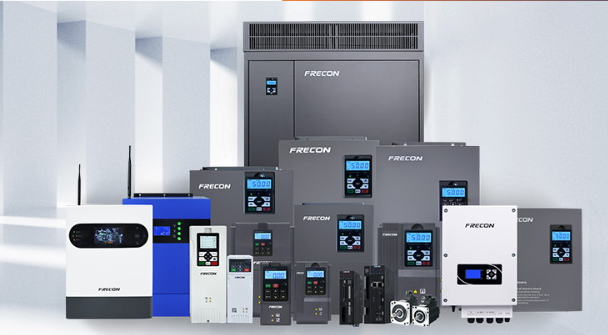
We developed the FRECON PV600 Series to address these practical requirements through advanced MPPT algorithms, DC/AC power supply support, battery-free operation, automatic dormancy and wake-up, built-in protection, water-level control, and performance recording. The series is designed for AM and PMSM applications and can achieve efficiency of up to 99%.
For agricultural operators and system integrators, the objective is not simply to connect solar panels to a pump. A properly configured MPPT solar pump controller should coordinate available solar energy, motor operation, and water demand. By approaching configuration as a complete system-design task, we can explore irrigation solutions to maximize renewable energy while supporting dependable day-to-day water delivery.