Injection molding manufacturers are under growing pressure to control energy costs without compromising production consistency. For hydraulic injection molding machines, the drive system plays an important role because motor speed, pump output, pressure, and flow are closely connected. A properly designed hydraulic servo system can adjust hydraulic power according to actual process requirements rather than continuously operating at a fixed output. For manufacturers evaluating industrial motor control solutions, this approach offers a practical path toward more responsive and energy-conscious production.
Why Hydraulic Servo Control Matters in Injection Molding
Traditional hydraulic injection molding systems commonly use fixed-speed motors and pumps, with flow and pressure adjusted through valves. When the pump produces more flow than the process requires, excess hydraulic energy can be dissipated through throttling or overflow. Research on electric-hydraulic injection molding equipment has identified these losses as an important source of energy consumption, particularly during process stages requiring lower or changing loads.
A hydraulic servo configuration approaches the problem differently. Instead of relying mainly on throttling to regulate output, the motor speed can be adjusted according to the required hydraulic demand. This allows the pump to provide a more appropriate combination of pressure and flow for different stages of the molding cycle.
Matching Pressure and Flow to Actual Machine Demand
Injection molding does not require identical hydraulic conditions throughout an entire cycle. Filling, packing, clamping, and other movements can place different demands on the hydraulic system. A control strategy that can respond to these changing requirements therefore has practical value for manufacturers.
A study of servo-hydraulic injection molding systems highlights the importance of accurately controlling injection velocity and packing pressure. These parameters directly influence the molding process and require responsive control of the hydraulic system.
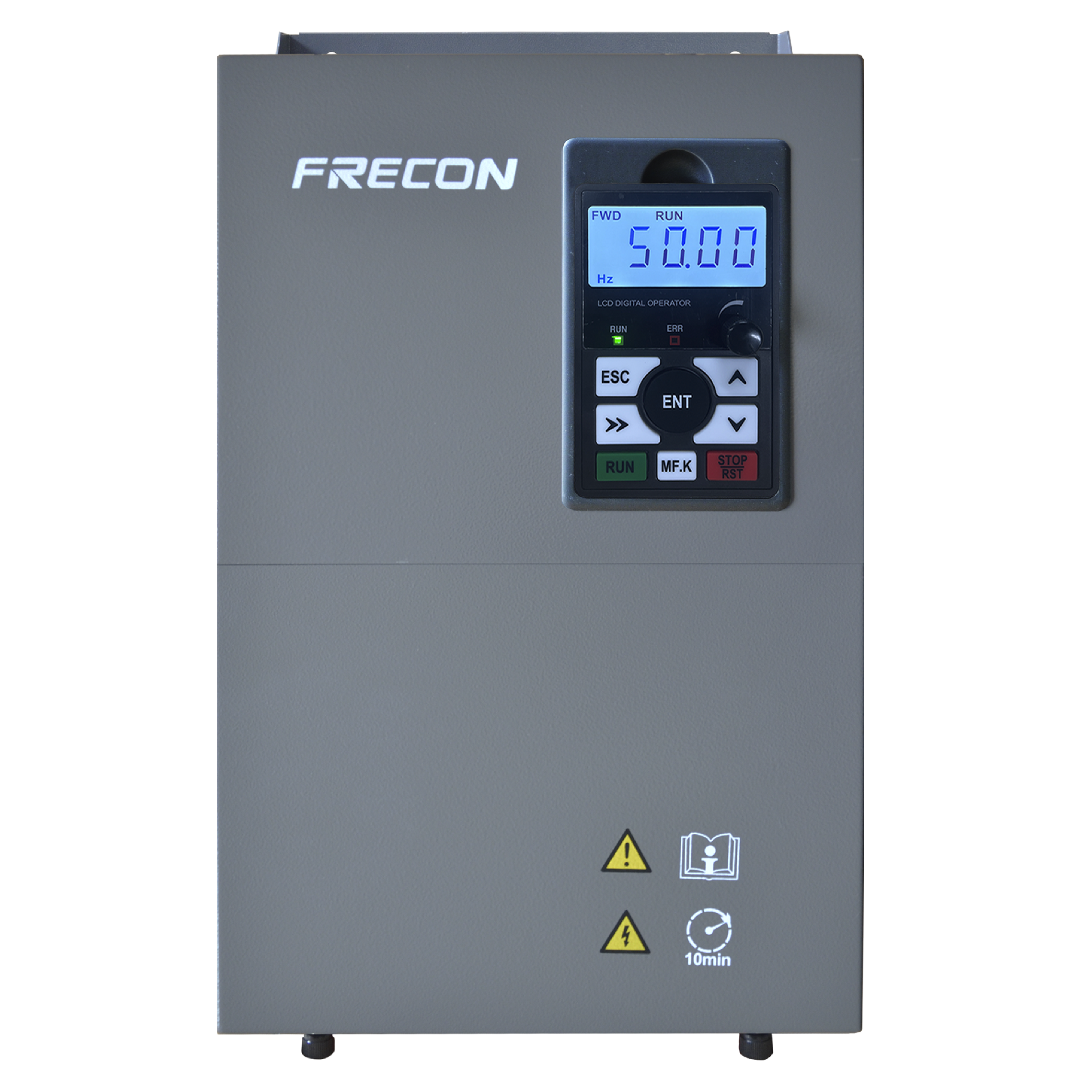
We designed the FRECON HS580 Series Hydraulic Servo Drive around this principle. The system uses a rotary encoder and pressure sensor to provide feedback on motor operation and hydraulic pressure. The synchronous servo motor can then adjust speed and torque to regulate hydraulic flow and pressure through closed-loop control.
This combination helps the hydraulic system respond to changing energy requirements rather than treating every stage of production in the same way. For industrial manufacturers, that can be particularly relevant when evaluating equipment upgrades based on both process performance and operating efficiency.
FRECON HS580: Industrial Motor Control for Hydraulic Systems
The HS580 Series is a dedicated hydraulic servo drive developed for hydraulic applications. FRECON lists the HS580 as part of its dedicated-purpose inverter portfolio, alongside other application-specific drive solutions.
The series supports four pumps in parallel control, which can be useful for hydraulic systems requiring coordinated pump operation. The drive also provides a built-in brake unit for models up to 110 kW, helping simplify installation within applicable system configurations.
Protection is another consideration when selectingindustrial motor control equipment. The HS580 includes multiple protection functions, including overcurrent, overvoltage, and short-circuit protection. These functions are designed to help protect the drive and support reliable operation under different working conditions.
The official HS580 specification chart covers models with adaptive motor ratings from 7.5 kW through 315 kW. The 380 V, three-phase series is specified for a 50/60 Hz input with a -15% to +30% voltage tolerance.
Closed-Loop Response for More Precise Hydraulic Control
Energy efficiency should not be considered separately from process control. A drive that saves energy but cannot respond accurately to production requirements may compromise product quality and overall productivity.
The HS580 uses closed-loop control for pressure and flow. According to FRECON, the system is designed for fast pressure rise, high regulation accuracy, and a relatively small over-pressure and overcharge range. These characteristics are relevant when manufacturers need the hydraulic system to react quickly to changing commands.
Communication and Integration for Modern Production Lines
Connectivity is becoming increasingly important when manufacturers integrate drives into automated production environments. A hydraulic servo drive may need to communicate with controllers, monitoring systems, or other automation equipment.
The HS580 provides multiple communication functions. Standard interfaces include built-in CAN and RS485, while EtherCAT and PROFIBUS are available as optional communication functions. This gives system integrators greater flexibility when incorporating the drive into different industrial automation architectures.
Selecting the Right Drive for Energy-Saving Injection Molding
Selecting a hydraulic servo drive should begin with the actual requirements of the injection molding machine. Motor power, pump configuration, pressure and flow requirements, feedback signals, communication architecture, and required protection functions all deserve consideration.
Manufacturers should also distinguish between theoretical energy-saving potential and results achieved under specific operating conditions. Research has demonstrated substantial energy-saving opportunities through variable-speed and servo-hydraulic technologies, but actual performance depends on machine design, operating profile, control strategy, and production conditions.
Our HS580 Series is intended to address these requirements through closed-loop pressure and flow control, synchronous servo motor control, multi-pump support, protection functions, and industrial communication options. We provide a dedicated drive solution for manufacturers seeking more controllable and energy-conscious hydraulic operation.
Building a More Efficient Hydraulic Production Strategy
Energy efficiency in injection molding is not achieved through one component alone. The pump, motor, drive, hydraulic circuit, sensors, controller, and production process must work together. A hydraulic servo architecture can provide an important foundation by allowing motor speed and hydraulic output to respond more closely to actual demand.
Our FRECON HS580 Series provides these capabilities in a dedicated hydraulic servo platform. With closed-loop pressure and flow control, support for four pumps in parallel, multiple protection functions, and communication options including CAN, RS485, EtherCAT, and PROFIBUS, it offers a practical option for injection molding applications where controllability and energy efficiency are important purchasing considerations.
A well-matched hydraulic servo drive can help manufacturers move beyond fixed-output hydraulic operation toward a more responsive production system. By evaluating actual machine requirements and selecting industrial motor control equipment accordingly, manufacturers can pursue a balanced strategy that considers energy use, process precision, system integration, and long-term operational performance.