Machine-room-less (MRL) elevators free up building space by placing key equipment within the hoistway or other designated areas rather than a separate machinery room. That change, however, places greater emphasis on compact layouts, thermal management, access for maintenance, and coordination between electrical and mechanical components.
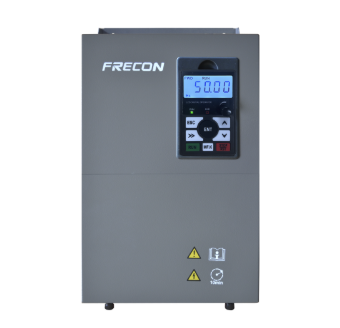
An Integrated Inverter can help simplify parts of a drive architecture, but successful modernization still depends on compatibility with the motor, controller, braking system, and safety equipment. At FRECON, we see careful system integration as an important engineering consideration across motor-control applications.
Rethinking Equipment Layout in MRL Buildings
Removing a dedicated machine room changes how engineers plan equipment access and installation. Drive units, controllers, wiring routes, and service clearances must fit within the building’s constraints without obstructing inspection or emergency procedures. Modernization teams should survey the existing hoistway and document available space before selecting replacement components.
Compact equipment can reduce cabinet requirements, yet smaller dimensions do not automatically mean easier maintenance. Technicians still need safe access to terminals, cooling paths, status indicators, and replaceable components. Cable routing should also limit interference with moving machinery and preserve separation between power wiring and sensitive control signals.
Thermal conditions deserve particular attention because equipment installed in confined spaces may experience restricted airflow. Engineers should verify ambient temperature limits, ventilation arrangements, and heat dissipation under expected operating conditions. Specifications from VFD manufacturers can help establish installation requirements, but the final design must reflect the actual enclosure and hoistway environment.
Integrating Drive Functions With Elevator Controls
Elevator modernization involves more than replacing the motor drive. The drive must communicate correctly with the elevator controller, respond to travel commands, and coordinate acceleration, deceleration, and stopping behavior. Interface details such as digital inputs, relay outputs, communication protocols, and fault signals should be confirmed before installation begins.
An elevator inverter must also suit the motor type and its operating characteristics. Engineers need to check rated voltage, current, power, speed range, feedback requirements, and the control method supported by the drive. Differences between the original and replacement equipment may require changes to parameter settings or controller logic.
Safety functions require separate verification. Door interlocks, overspeed protection, emergency stopping, braking circuits, and other protective systems must operate according to applicable elevator codes and the system design. Drive functions should not be treated as substitutes for independently required safety devices. Commissioning should involve qualified elevator professionals and documented checks of the complete installation.
Managing Regeneration, Braking, and Energy Flow
During elevator travel, energy flow changes with car direction, passenger load, counterweight balance, and acceleration profile. Certain operating conditions cause the motor to act as a generator, sending energy back toward the drive’s DC bus. The system must manage this energy to prevent excessive bus voltage and maintain controlled deceleration.
Depending on the drive architecture, braking energy may be dissipated through a braking resistor or recovered by a regenerative unit. The appropriate arrangement depends on travel frequency, load patterns, power-system compatibility, and the project’s energy objectives. Engineers should calculate expected duty cycles rather than selecting components from motor power alone.
Control tuning affects both comfort and mechanical stress. Acceleration ramps, speed-loop response, and torque control influence how smoothly the car starts and stops. During modernization, measured travel performance should be compared with the original requirements, including leveling accuracy and ride quality. An Integrated Inverter may consolidate certain drive functions, but its suitability must be judged against the complete braking and control architecture.
Applying Compact Drive Concepts Beyond Elevators
Lessons from MRL design also apply to other machines where space, responsiveness, and precise control are important. Injection molding, for example, requires hydraulic pressure and flow to follow changing process demands. Controlling motor speed and torque according to feedback can reduce unnecessary pumping effort compared with operating a hydraulic system continuously at fixed output.
FRECON’s HS580 Series Hydraulic Servo Drive is designed for hydraulic servo systems using a rotary encoder and pressure sensor to provide feedback on flow and pressure, respectively. Its control approach adjusts motor speed and torque to match the injection molding machine’s changing requirements. This example illustrates how closed-loop regulation can coordinate motor behavior with the needs of a specific process, although it is not presented as an elevator drive product.
The broader engineering lesson is that integration should simplify system operation without obscuring service requirements. Engineers comparing solutions from VFD manufacturers should review functional boundaries, supported feedback devices, fault reporting, cooling needs, and access to configuration information. A compact design is useful only when the equipment remains serviceable and performs reliably under its intended operating conditions.
Conclusion
Machine-room-less modernization succeeds when compact equipment design is matched with careful integration and verifiable commissioning. Space savings must not come at the expense of cooling, inspection access, electrical compatibility, or required safety functions.
By reviewing the whole system—from drive and motor behavior to braking and controller interfaces—engineers can develop a modernization plan that fits the building and supports long-term maintenance. At FRECON, we value this application-focused approach to motor control, where practical engineering decisions matter as much as the equipment selected.