Solar pumping performance changes throughout the day as sunlight intensity, temperature, water demand, and hydraulic conditions fluctuate. Even when photovoltaic panels have sufficient rated capacity, poor parameter settings or mismatched pump characteristics can reduce water delivery and waste available energy.
Calibrating a solar water pump inverter involves more than adjusting a few values; it requires checking the relationship between solar input, motor behavior, and the actual pumping system. At FRECON, we focus on practical drive technology that helps users adapt to changing energy conditions while evaluating performance against measurable operating results.
Understanding the Variables Behind Solar Pump Performance
Solar radiation determines how much electrical power a photovoltaic array can supply at a given moment. Passing clouds can cause rapid changes in available power, while high panel temperatures may reduce voltage and alter the array’s operating point. Calibration should account for these variations rather than treating the solar source as a constant-voltage supply.
Hydraulic conditions introduce another layer of complexity. Pump output depends on factors such as total dynamic head, pipe resistance, water level, and the pump’s operating curve. If the required head increases, the flow rate may fall even when the motor continues running normally. Engineers should record baseline flow, pressure where relevant, motor speed, and input power before changing inverter parameters.
Motor characteristics also influence the calibration process. Asynchronous motors and permanent-magnet synchronous motors can require different control settings and parameter identification procedures. A high efficiency solar inverter system should therefore be assessed as a combination of photovoltaic modules, drive, motor, pump, and water distribution network. Examining only electrical conversion figures cannot establish whether the installation is delivering the required volume of water.
Calibrating Maximum Power Point Tracking
Maximum power point tracking, commonly called MPPT, adjusts the electrical operating point of the photovoltaic array to capture available power as sunlight changes. The controller typically evaluates electrical measurements and adjusts its operating reference to approach the array’s maximum power point. Calibration needs to account for the response speed of this process as well as its stability under fluctuating irradiance.
Tracking behavior can be checked by observing PV voltage and current during different sunlight conditions. Excessive oscillation around the operating point may cause avoidable power fluctuations, while a slow response may leave usable energy untapped after a sudden change in irradiance. Engineers should compare results across stable sunlight, partial shading where applicable, and naturally changing weather, without assuming that one brief test represents an entire day.
The MPPT solar pump inverter should also be evaluated alongside the motor’s operating limits. Available solar power may not support the pump’s requested speed during weak sunlight, so the controller needs to respond appropriately rather than repeatedly attempting an unsustainable operating point.
During testing, record how the system behaves during startup, reduced irradiance, and recovery when sunlight increases. These observations help distinguish normal power limitation from incorrect settings or system faults.
Matching Drive Settings to Hydraulic Demand
Calibration should begin with verified motor nameplate data and the pump’s operating requirements. Relevant settings may include motor rated voltage, rated current, frequency, acceleration time, deceleration time, and the control mode supported by the equipment. Incorrect motor data can impair control performance or cause nuisance trips, making parameter verification a necessary step before fine adjustment.
Hydraulic measurements help determine whether electrical changes improve actual performance. Flow meters can measure water delivery, while pressure gauges and water-level readings provide context for changes in pumping conditions. If motor speed increases but delivered flow barely changes, the limitation may lie in the pipework, water source, pump selection, or total head rather than inverter tuning alone.
During field trials, change one parameter at a time and retain a record of the previous value. This approach makes cause and effect easier to interpret and reduces the risk of introducing several interacting variables. A solar water pump inverter should be calibrated within its specified electrical and thermal limits, with protection functions kept active. The goal is not simply to maximize speed, but to find stable operation that meets water demand while using the available solar energy effectively.
Validating Operation Across Weather and Temperature Changes
Laboratory tests can establish a baseline, but outdoor validation is necessary because real installations experience changing irradiance, dust accumulation, seasonal temperatures, and fluctuations in the water source. A useful test plan includes observations at different times of day and under more than one operating condition. Consistent logging makes it easier to compare daily water output and energy use.
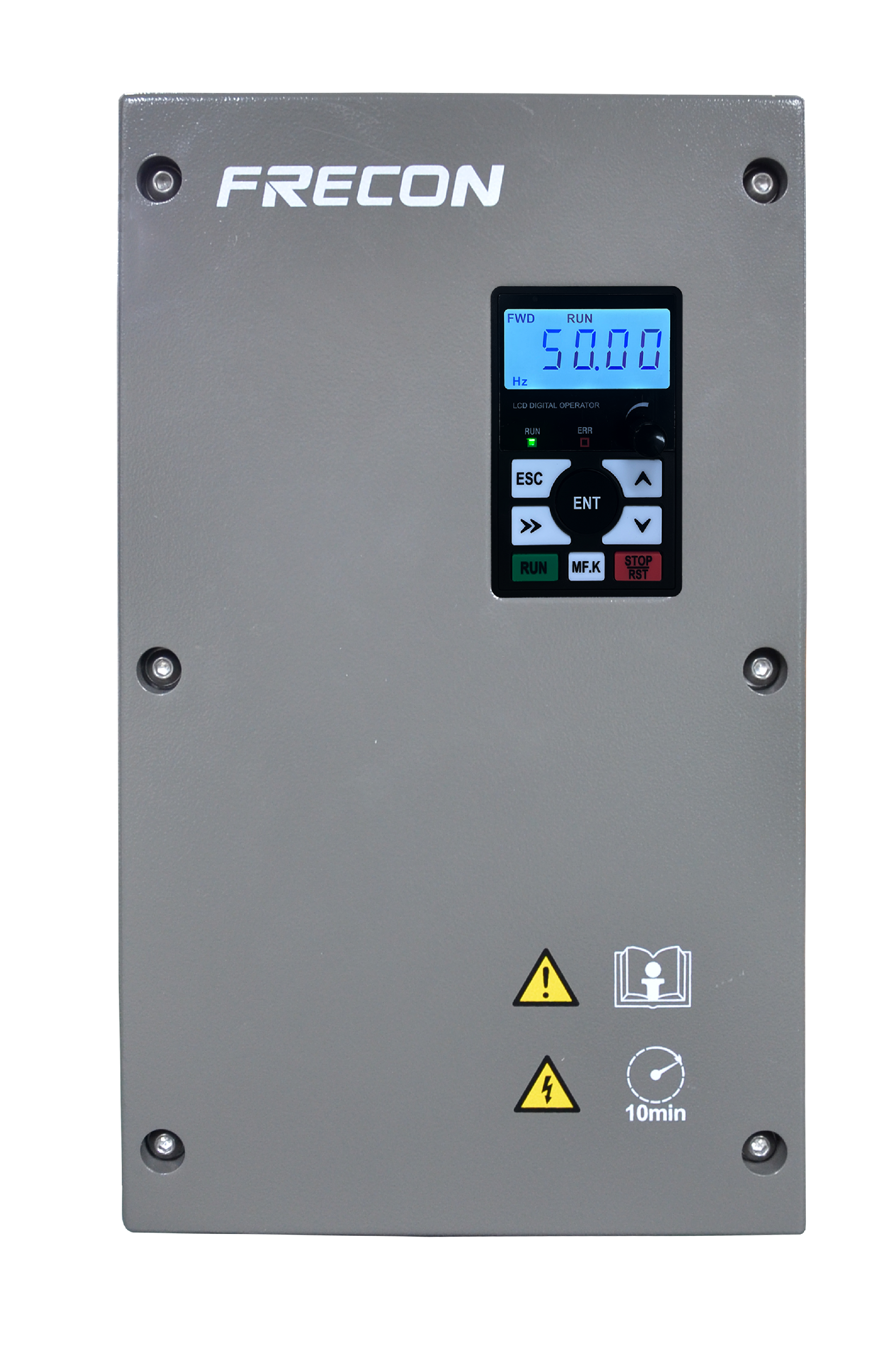
Temperature deserves specific attention because it affects both photovoltaic performance and inverter operating conditions. The PV380 series solar pump inverter supports an operating temperature range of −10°C to 60°C, according to the supplied specifications. It uses advanced MPPT algorithms with a stated efficiency of up to 99%, supports asynchronous motors and permanent-magnet synchronous motors, and can accept solar DC or grid AC input with automatic DC/AC switching. Field validation should confirm the actual installation’s ambient conditions, input configuration, and motor compatibility against the relevant product documentation.
Conclusion
Accurate calibration connects electrical control with the physical demands of water delivery. Engineers can improve system evaluation by measuring solar input, verifying motor parameters, checking MPPT behavior, and comparing water output under repeatable conditions. At FRECON, we view field data as an important basis for assessing drive performance and identifying opportunities for more consistent operation.
A well-tested MPPT solar pump inverter should respond sensibly to changing sunlight while respecting motor and pump limits, and the wider installation must be judged by its real water-delivery results. Combining careful calibration with ongoing monitoring provides a sounder basis for dependable solar pumping across changing seasons and site conditions.