Commercial solar installations must balance power conversion, operational stability, and the demands of the equipment they support. Pumping applications add another layer of complexity because motor speed, water pressure, and available sunlight can all change throughout the day.
Understanding how a commercial solar inverter can incorporate vector control begins with separating the task of converting electrical power from the task of regulating motor behavior. At FRECON, we consider both functions when assessing practical solar-powered systems, with attention to control precision, energy availability, and reliable operation under changing site conditions.
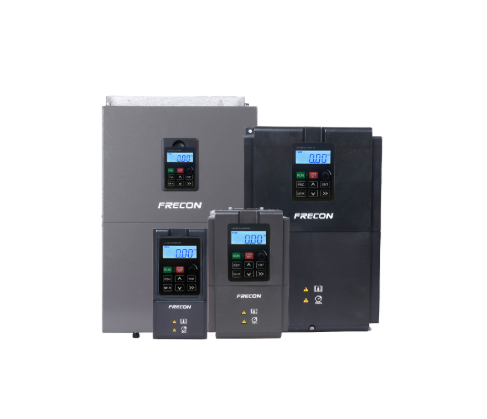
Understanding the Relationship Between Power Conversion and Motor Control
Solar power conversion and motor control address different engineering challenges. The power-conversion stage adapts electricity from photovoltaic panels to the form required by the load, while the control strategy determines how the motor responds to commands and changing operating conditions. These functions may work together inside an integrated drive, but their roles remain distinct. Understanding this division helps engineers evaluate whether a system's electrical architecture suits its intended application.
Photovoltaic output fluctuates with cloud cover, panel temperature, shading, and the angle of sunlight. A solar drive must respond to these variations without allowing unstable input conditions to create unnecessary motor disturbances. Power management determines how much energy is available, whereas motor-control algorithms regulate torque and speed within the system's operating limits. Their coordination influences whether a pump can maintain useful performance as solar conditions change.
System designers should also distinguish grid-connected commercial solar generation from direct solar pumping. Grid-connected installations commonly prioritize energy conversion and grid requirements, while standalone pumping systems must account for the relationship between solar availability and water demand. Some applications may combine solar power with grid or other backup sources. The appropriate design depends on the electrical supply, the load profile, and the consequences of interruptions.
How Vector Control Regulates Motor Performance
Vector control, often called field-oriented control, regulates AC motor torque and magnetic flux through coordinated control of current components. Rather than adjusting output frequency alone, the controller estimates or measures motor conditions and manages current to achieve the requested response. This approach can provide more precise speed and torque regulation than basic scalar control, particularly when the load changes frequently or requires controlled acceleration.
A vector control inverter typically relies on a motor model, current feedback, and control algorithms to regulate the motor. Depending on the design, it may use sensorless estimation or feedback from an encoder. Sensorless methods can reduce wiring complexity, although their accuracy depends on motor parameters and operating conditions. Encoder-based feedback can improve control information but adds hardware and installation requirements.
Performance depends on proper commissioning as much as on the control method itself. Motor nameplate data, rated current, voltage, frequency, and speed should be entered correctly where the drive requires them. Engineers may then run supported motor identification procedures and evaluate acceleration, deceleration, low-speed behavior, and load response. Incorrect parameter settings can undermine control quality, increase current demand, or cause faults even when the inverter supports advanced algorithms.
Coordinating Solar Power With Vector Control
Combining photovoltaic power management with motor regulation requires attention to the limits of both subsystems. MPPT algorithms seek the solar array's available maximum power point, while vector control adjusts motor torque and speed according to the control command. These processes have different objectives, so the system must manage situations in which the requested pumping power exceeds what the panels can supply.
A high-frequency solar pump inverter may use high-frequency switching to synthesize the motor's output waveform and regulate electrical current. Switching frequency should not be confused with motor output frequency: the former describes the rate at which power electronics switch, while the latter influences motor speed. Higher switching frequency can improve certain waveform characteristics, but it may also increase switching losses and thermal stress. The appropriate value depends on the power stage, motor, and design priorities.
During weak sunlight, a well-coordinated system may reduce motor speed or adjust its operating point to match available power, depending on its control capabilities. Pump output then changes with speed, hydraulic head, and the pump's performance curve. Engineers should avoid assuming that sophisticated motor control can compensate for insufficient solar capacity. Correct array sizing and realistic water-demand estimates remain essential to achieving useful daily output.
Using Water-Level Control to Protect Pumping Equipment
Water-level management connects electrical control with the physical conditions of a pumping installation. If a source runs dry, continued operation may expose the pump to overheating, inadequate lubrication, or other forms of damage, depending on the pump design. When a storage tank reaches its upper level, further pumping may waste energy or cause overflow. Automated stop conditions can help manage both situations when appropriate sensors and control logic are installed.
The PV500 solar pumping inverter includes intelligent dry-run protection and water-level control. Its stated functionality allows the pump to stop automatically when the water source runs dry or the tank is full, helping reduce equipment risk and unnecessary water delivery. These functions depend on suitable sensor connections, correct configuration, and installation-specific testing; the actual response should be verified during commissioning rather than assumed from a feature description alone.
Field validation should cover more than whether the pump stops once. Installers can simulate low-source and full-tank signals, observe the controller's response, and check whether the system resumes operation under the intended conditions. Sensor placement, cable routing, signal reliability, and the consequences of a failed sensor deserve attention. Where water supply is critical, operators should also define inspection procedures and fallback measures for faults that automated controls cannot detect.
Conclusion
Successful integration depends on coordinating solar energy management, motor regulation, and the physical demands of pumping rather than treating them as isolated functions. A high-frequency solar pump inverter can combine switching-based power control with motor regulation, while vector control can improve torque and speed management when the application and configuration support it.
At FRECON, we believe informed system design begins with clear specifications, realistic load calculations, and practical commissioning tests. By assessing these elements together, engineers can make better decisions about how a commercial solar inverter should serve a solar-powered pumping installation.