Industrial power systems rarely operate under identical conditions throughout the day. Energy prices fluctuate, electrical supplies vary between sites, and machinery demands different levels of torque as production changes. These challenges have encouraged engineers to develop hybrid variable-frequency drive technologies that coordinate power sources with motor requirements.
As a VFD manufacturer, we at FRECON view this development as an engineering challenge involving control flexibility, energy utilization, and dependable operation. Understanding the technical principles behind hybrid drives helps system designers determine which functions genuinely improve performance and which depend on the installation itself.
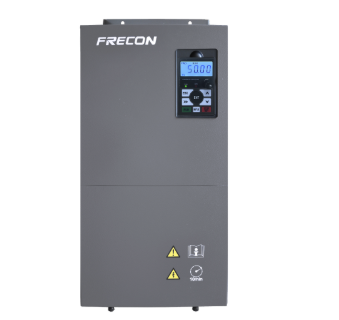
Combining Multiple Power Sources Through Hybrid Architecture
Traditional motor-drive installations often rely on a single electrical supply, but some applications benefit from access to more than one source. Solar power, grid electricity, and backup generation can serve different roles depending on availability and operating priorities. Hybrid architecture coordinates these inputs through suitable power-conversion stages, switching arrangements, and control logic. The objective is to match available energy with the load while respecting the electrical limits of every connected component.
The term hybrid VFD can describe different configurations, so its precise meaning should be confirmed in the equipment documentation. Some systems combine renewable and conventional power inputs, while others integrate multiple operating modes or energy-management functions. These arrangements are not interchangeable: source compatibility, DC-bus design, switching hardware, and protection requirements determine what a particular drive can support. Clear system diagrams help prevent assumptions based solely on marketing terminology.
Power-source coordination also requires defined priorities. An installation might favor photovoltaic energy whenever sufficient sunlight is available and use grid power when solar generation falls below demand, provided the equipment supports that arrangement. Engineers must establish how the system handles source transitions, voltage fluctuations, and unexpected interruptions. Smooth coordination depends on the actual circuit design and control strategy, not simply on the presence of multiple energy inputs.
Improving Energy Management Through Intelligent Control
Modern drive development increasingly focuses on matching motor consumption to the work being performed. Pumps and fans, for example, often operate inefficiently when their motors run at fixed speeds despite changing flow or pressure requirements. Variable-frequency control adjusts motor speed by changing output frequency, allowing the equipment to respond more closely to process demand. The achievable energy savings depend on the load profile, motor characteristics, and system design.
Hybrid control introduces an additional decision: how should available energy be allocated as conditions change? A controller may monitor source voltage, power demand, and operating status before adjusting motor output or changing an available operating mode. Useful strategies include setting minimum operating thresholds, limiting demand during low-generation periods, and defining acceptable transitions between power sources. Such decisions should reflect the application's process requirements rather than prioritize energy savings at the expense of necessary output.
Measurement is essential to evaluating these strategies. Engineers can compare energy consumption, motor speed, production output, and operating time before and after a control change. Normalizing results against production volume or delivered water makes comparisons more meaningful because changing workloads can distort simple electricity totals. A well-designed assessment also records ambient conditions and operating schedules so that apparent improvements are not attributed to the drive without sufficient evidence.
Applying High-Frequency Switching and Solar Conversion
Power semiconductors switch rapidly to regulate the electrical energy delivered to a motor. Switching frequency affects current ripple, waveform quality, acoustic behavior, and power-device losses, creating trade-offs that designers must evaluate together. Raising the switching frequency may improve some aspects of motor operation, yet it can also increase heat generation and electromagnetic interference. Appropriate settings depend on the hardware, load, and thermal limits of the drive.
Solar pumping illustrates how power conversion and motor regulation interact. Photovoltaic output changes with irradiance and panel temperature, while the pump's hydraulic operating point depends on water level, pipe resistance, and delivery height. A solar water pump inverter must manage the available electrical power while controlling the motor within its permitted range. Neither sophisticated switching nor advanced control can compensate for an undersized solar array or an incorrectly selected pump.
The PV600 Series Solar Pump Inverter uses advanced maximum power point tracking (MPPT) algorithms, with stated tracking efficiency reaching 99%. MPPT adjusts the operating point of the photovoltaic array to capture available solar power as conditions change. This figure refers to tracking efficiency, not the total efficiency of the entire pumping system. Actual water delivery also depends on conversion losses, motor and pump efficiency, solar conditions, and installation design.
Developing Reliability Through Protection and Validation
Technical innovation must be accompanied by practical protection measures. Motor drives may need responses to overcurrent, undervoltage, overheating, overload, and other abnormal conditions, depending on their design and application.
Hybrid installations add further considerations, including source compatibility, transition behavior, and the consequences of losing one input. Engineers should verify each supported protection function against the manufacturer's specifications and documented test procedures.
Commissioning should reproduce realistic operating scenarios wherever safely possible. Tests can examine startup behavior, changes in load, variations in available solar power, and recovery after a protective shutdown. For pumping applications, technicians may also verify water-level signals and dry-run protection if those functions are provided. Recording the conditions and responses creates a baseline for maintenance and helps distinguish configuration problems from equipment faults.
Conclusion
Hybrid drive technology is not simply about connecting more than one energy source; it involves coordinating power availability, motor demand, and protection requirements within a defined electrical architecture. The practical value of a hybrid VFD depends on its actual supported functions, control flexibility, and suitability for the application.
Solar installations also benefit from accurate MPPT evaluation and realistic performance testing. At FRECON, we focus on the engineering principles behind these developments so that users can assess equipment through measurable results, transparent specifications, and operating conditions that reflect real-world needs.