Industrial equipment rarely operates under ideal conditions. Motors may face fluctuating loads, frequent starts, dusty environments, and long production shifts, all of which place demands on electrical drive systems. Selecting an industrial VFD requires more than matching rated power to motor capacity; engineers must consider control performance, electrical compatibility, cooling, and maintenance needs together. At FRECON, we recognize that understanding these factors helps users build dependable systems around their actual operating requirements rather than relying on specifications alone.
Match Drive Ratings to Real Operating Conditions
Motor nameplate power provides a useful starting point, but it does not tell the whole story. Conveyor systems, mixers, compressors, and machine tools place different demands on their motors, even when their rated kilowatts appear similar. Load inertia, starting torque, acceleration time, and overload duration all affect the drive capacity required for stable operation.
A 3 phase VFD should be matched to the motor’s rated current as well as its power rating. Current demand may rise considerably during acceleration or under heavy loads, and a drive selected without sufficient capacity can trigger overcurrent faults or restrict production. Engineers should also review the manufacturer’s derating guidance for elevated ambient temperatures, installation altitude, and switching frequency.
Supply conditions deserve equal attention. Check the incoming voltage range, available short-circuit protection, grounding arrangements, and the motor’s insulation characteristics. Long motor cables may introduce voltage reflections or increase electrical stress, particularly in installations using fast-switching drives. Cable length, shielding, and any need for output reactors or filters should be assessed during system design rather than after commissioning.
Evaluate Control Performance and Motor Response
Control mode influences how accurately a motor follows changing production demands. Basic voltage-to-frequency control can suit many fans and pumps with relatively straightforward speed requirements. Applications involving variable loads or tighter speed regulation may benefit from sensorless vector control, which adjusts motor behavior using a more detailed model of its electrical characteristics.
A three phase AC drive should therefore be assessed against the machine’s working profile instead of being selected solely by its advertised feature list. Consider whether the motor must deliver strong torque at low speed, recover quickly from load changes, or maintain consistent speed during material handling. These requirements help determine which control method and tuning functions are worth prioritizing.
Commissioning quality also shapes long-term performance. Motor parameters should be entered accurately, acceleration and deceleration ramps should reflect mechanical limits, and protective thresholds should suit the application. Excessively aggressive ramps can stress belts, couplings, and gearboxes, while overly conservative settings may reduce throughput. Recording the final parameter set makes future replacement and troubleshooting more straightforward.
Inspect Construction, Cooling, and Electrical Protection
Heat is a major contributor to electronic component ageing. Dust-covered cooling passages, blocked ventilation, high cabinet temperatures, and poorly planned airflow can all reduce the thermal margin available to a drive. Before purchasing an industrial VFD, examine its cooling arrangement, enclosure requirements, recommended clearances, and maintenance access. A unit that fits the panel dimensions but cannot dissipate heat effectively may become a recurring source of downtime.
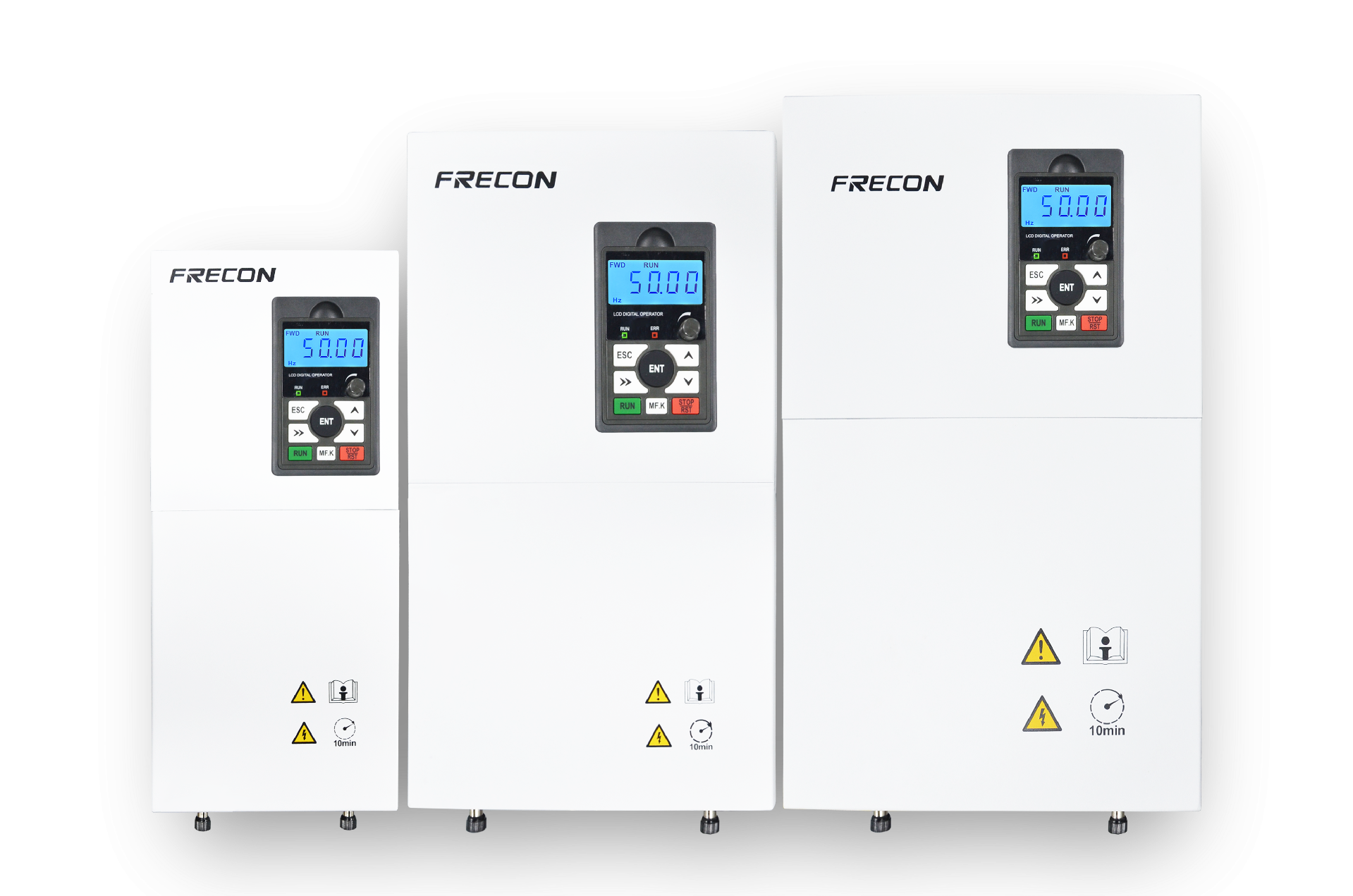
Electrical design features can also influence service life and integration. The FR20 Series General Vector Inverter listed by FRECON includes a built-in DC reactor, standard C3 filter, built-in braking unit, and Safe Torque Off (STO) function. It also supports common DC bus solutions, parameter copying through a keypad, independent air-duct design, and through-wall installation. These features are relevant when evaluating power quality, braking needs, safety architecture, and cabinet layout; actual suitability depends on the model rating and the application’s electrical and mechanical requirements.
Protection functions must be reviewed in context. Overcurrent, overvoltage, overload, and overheating protection can help identify abnormal operating conditions, but they do not replace correct system design. STO is intended to prevent motor torque generation when implemented in an appropriate safety system; it is not a substitute for electrical isolation during maintenance. Confirm the applicable safety requirements, installation instructions, and certification details before finalizing the design.
Plan for Maintenance and Long-Term Operating Costs
Purchase price represents only one part of the cost of an industrial drive. Energy consumption, unexpected stoppages, replacement parts, technician time, and production losses can outweigh the initial price difference between two units. A useful comparison considers expected operating hours, load patterns, service conditions, and the consequences of failure.
Maintenance access matters just as much as electronic specifications. Technicians should be able to inspect cooling fans, clean air passages, tighten connections where required, and review fault histories without unnecessary disassembly. Standardized parameter records and consistent model selection across similar machines can also reduce the time needed to replace or recommission equipment.
Spare-parts planning should reflect the production environment. Critical applications may justify keeping a compatible replacement drive or essential accessories on site, particularly if procurement lead times are long. Documenting motor data, wiring diagrams, parameter settings, and fault responses helps maintenance teams distinguish drive problems from mechanical overload, supply disturbances, or motor defects. These records also make it easier to identify recurring faults and improve operating practices over time.
Conclusion
Durability comes from matching electrical ratings, control behavior, thermal design, protection, and maintenance provisions to the conditions a machine actually encounters. Comparing a 3 phase VFD against these practical criteria provides a stronger basis for selection than relying on rated power or purchase cost alone.
Once the motor and load requirements are clear, a three phase AC drive can be evaluated for compatibility, commissioning effort, and lifecycle cost, while a final review of the industrial VFD specifications confirms whether the chosen equipment fits the application. At FRECON, we believe a disciplined selection process helps engineering teams make informed drive decisions and support more reliable industrial operation.