Water treatment plants must balance flow rates, pressure stability, energy use, and equipment protection, often while demand changes throughout the day. Selecting a VFD for pump applications can help operators regulate motor speed instead of relying on throttling valves to control every change in flow. However, the drive itself is only one part of the system. At FRECON, we view successful integration as a matter of matching motor control to hydraulic conditions, process requirements, and the electrical characteristics of the installation.
How Variable-Speed Control Supports Water Treatment
Water treatment processes rarely require an unchanging flow rate. Raw-water intake, filtration, chemical dosing, backwashing, and distribution can each operate under different conditions. Fixed-speed pumps may continue running at full speed even when demand falls, wasting energy through throttling or bypass arrangements. Variable-speed operation allows pump output to respond more closely to process demand.
Pressure control is particularly important in distribution and filtration circuits. A pressure sensor can provide feedback to a drive, which adjusts motor speed to maintain a configured setpoint. This arrangement can reduce pressure fluctuations as valves open and close, provided that sensor placement, control-loop tuning, and pump characteristics are considered together.
The benefits depend on the hydraulic system. Pump affinity laws indicate that, under comparable conditions, flow is approximately proportional to rotational speed, while power demand can vary roughly with the cube of speed. Actual results differ with static head, efficiency, and operating point. Engineers should therefore assess the full pump curve rather than assume that every speed reduction produces the same percentage of energy savings.
Distinguish Pump Control From General Frequency Conversion
A pump-control application requires more than changing motor frequency. Engineers must account for minimum flow, required pressure, motor current, acceleration limits, and the consequences of losing feedback signals. A 3 phase VFD can regulate motor speed by varying output frequency and voltage, but its control mode must suit the motor and process. Simple V/f control may be sufficient for some duties, while applications with changing loads or demanding low-speed torque requirements may benefit from vector control.
The term Industrial Frequency Converter describes equipment used to adjust AC motor speed in industrial environments. Such equipment may serve pumps, fans, conveyors, and other machinery, yet the suitability of a specific unit depends on its ratings, control functions, and installation conditions. In water treatment, the selection should reflect whether the pump handles clean water, sludge, chemical solutions, or another medium with distinct mechanical demands.
Integration also requires attention to the control architecture. A programmable logic controller may coordinate several pumps, valves, tank levels, and treatment stages, while the drive manages motor speed and local protection. Communication protocols can exchange operating commands, measured values, and fault information. Defining which device owns each control decision helps avoid conflicting commands and makes troubleshooting more straightforward.
Match Drive Features to Pumping Conditions
Pump selection begins with the duty point: the required flow and total dynamic head. Engineers should compare this point with the pump curve and identify the expected operating range, including periods of low demand. The VFD for pump should then be sized using motor nameplate current, supply voltage, overload requirements, and any applicable derating for temperature or installation altitude. Nominal kilowatt ratings alone may not capture the actual demands of a difficult duty cycle.
Protection settings deserve equal care. Dry-run conditions can damage some pumps, while excessive pressure, blocked discharge, and frequent starts may stress equipment or interrupt treatment. Depending on the system, useful measures include pressure and level switches, flow monitoring, motor overload protection, and suitable fault responses. Software-based detection should be checked against real operating conditions; it may not identify every mechanical problem without additional sensors.
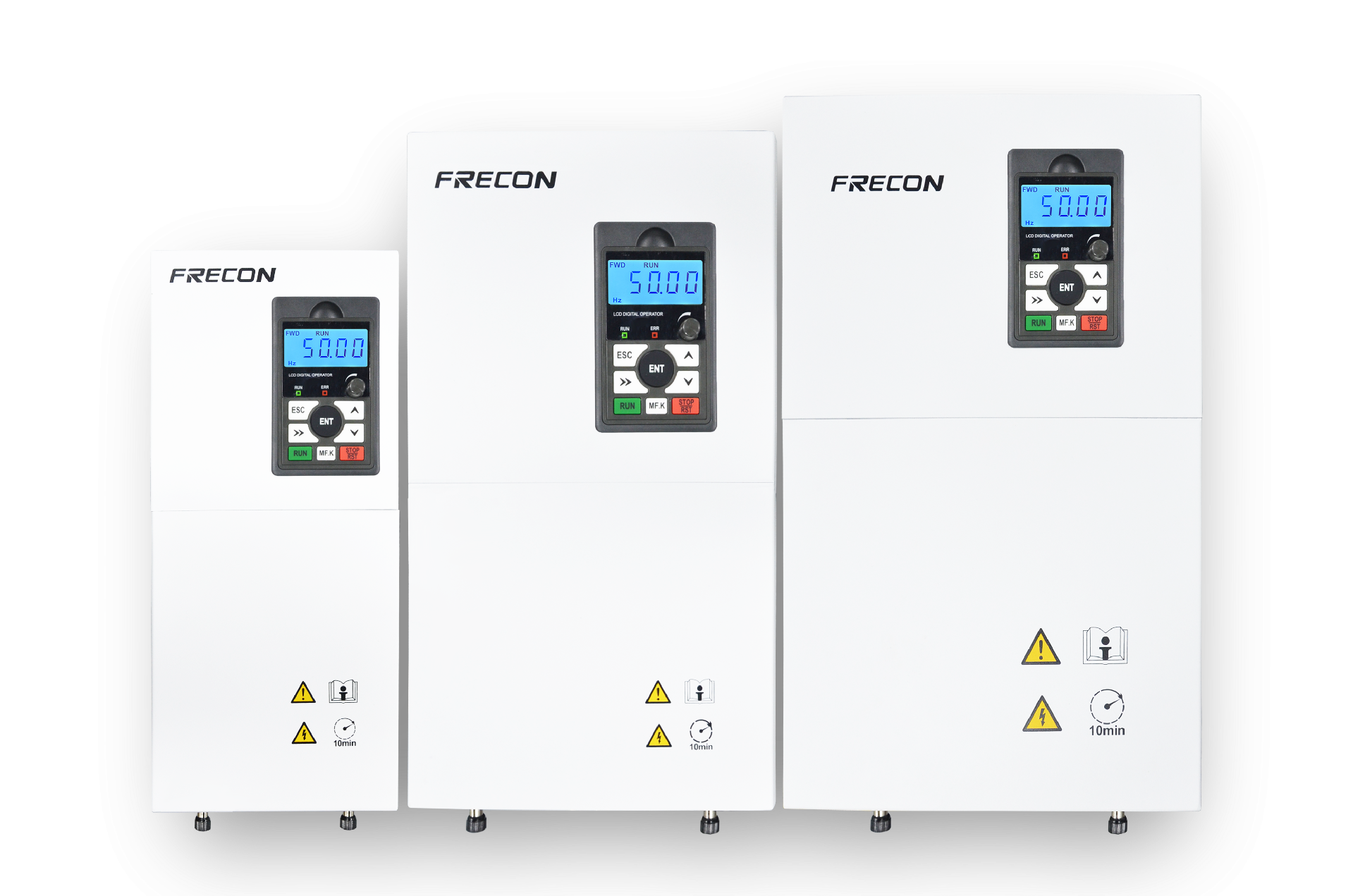
For projects requiring more advanced drive integration, FRECON’s FR20 Series General Vector Inverter product page lists features including a built-in DC reactor, standard C3 filter, built-in braking unit, Safe Torque Off (STO), common DC bus support, and an independent air-duct design. These functions may be relevant to electrical integration, braking requirements, and cabinet cooling, but their value depends on the application. Engineers should verify the specific model’s voltage and current ratings, pump-control capabilities, environmental limits, and applicable documentation before specifying it for a water treatment installation.
Improve Reliability Through Commissioning and Monitoring
Commissioning should begin with verification of wiring, grounding, motor data, sensor polarity, and feedback scaling. The control loop can then be tested at low, medium, and high demand levels. If pressure oscillates, the cause may involve aggressive proportional-integral settings, sensor placement, air trapped in the pipework, or rapid changes in valve position. Adjustments should be made methodically rather than treating every instability as a drive fault.
A 3 phase VFD also needs operating limits that protect both the motor and the hydraulic system. Minimum speed must remain compatible with the pump’s cooling, lubrication, and flow requirements. Acceleration and deceleration ramps should avoid water hammer, while restart behavior after a power interruption should account for process safety and equipment condition. Where multiple pumps operate in parallel, sequencing logic can distribute running hours and bring additional capacity online as demand rises.
Conclusion
Water treatment systems benefit most when hydraulic design, motor control, instrumentation, and maintenance planning are treated as connected engineering tasks. An Industrial Frequency Converter can regulate motor operation, but its effectiveness depends on suitable sizing, reliable feedback, and carefully configured protection.
Pairing a VFD for pump duties with a compatible 3 phase VFD solution should therefore begin with the process requirements, not the equipment label alone. At FRECON, we encourage a system-level evaluation so that drive selection supports stable water delivery, practical maintenance, and responsible energy use over the installation’s operating life.