Industrial drive selection involves more than fitting an inverter into an electrical cabinet. Frequent load changes, elevated temperatures, tight installation spaces, and demanding speed requirements can all influence long-term reliability.
A speed control inverter must balance motor response with thermal performance and electrical compatibility, while its physical design should suit the available installation space. At FRECON, we believe evaluating these factors together gives engineers a clearer basis for selecting equipment that can withstand real operating demands.
Assess Control Accuracy Against Application Demands
Different machines place different demands on motor speed regulation. Fans and centrifugal pumps often operate across relatively predictable load curves, whereas mixers, conveyors, and processing machinery may experience sudden torque changes. Understanding the duty cycle helps engineers decide whether basic V/F control is sufficient or whether more advanced control methods are needed.
Vector control estimates motor behavior to regulate torque and speed more effectively than basic scalar control in many applications. Sensorless vector control can provide improved low-speed performance without requiring an encoder, although its results depend on motor parameters, tuning, and the operating range. Applications requiring precise feedback at very low speeds may need a closed-loop arrangement with suitable sensors.
Response speed should also be considered alongside accuracy. Rapid acceleration can improve machine throughput, but excessive ramp rates may strain couplings, belts, gearboxes, and driven loads. Engineers should evaluate the machine’s inertia, torque profile, and process limits before adjusting acceleration or deceleration settings. The objective is stable, repeatable operation rather than simply achieving the fastest possible response.
Examine Power Density and Thermal Design Together
Cabinet space is a practical constraint in many industrial installations. A high power density inverter can provide substantial drive capacity within a smaller footprint, freeing room for other control components or allowing a more compact enclosure. However, a smaller external size does not automatically indicate better durability; component layout, airflow, heat dissipation, and ambient conditions all affect operating life.
Heat management becomes especially important in continuous-duty applications. Power semiconductors, capacitors, and other electronic components experience thermal stress as temperatures rise, and repeated temperature cycling can contribute to ageing. Engineers should review the rated ambient temperature, cooling method, required mounting clearances, and any derating guidance for high temperatures or elevated installation sites.
The enclosure itself influences cooling performance. Restricted airflow, accumulated dust, and nearby heat sources can raise internal temperatures beyond expected levels. Cabinet designers should maintain the manufacturer’s specified clearances, separate heat-generating components where practical, and plan access for cleaning and inspection. These measures help a compact drive operate within its intended thermal limits rather than forcing it to run continuously under excessive heat.
Evaluate Drive Architecture and Functional Flexibilit
The choice of drive architecture affects how easily a system can adapt to changing production requirements. A smart electric drive may combine motor-control algorithms, parameter management, fault diagnostics, and communication functions to simplify integration with a broader automation system. Its usefulness depends on whether these functions address actual operating needs rather than adding complexity that technicians rarely use.
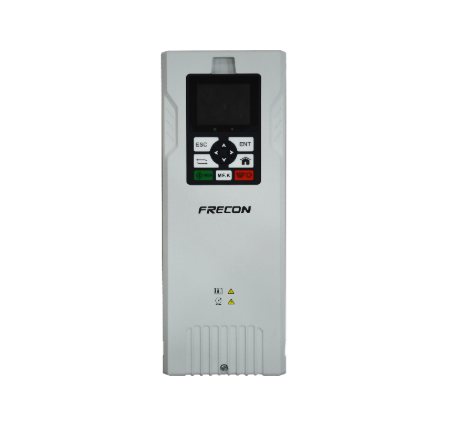
For equipment requiring varied speed and torque behavior, control flexibility can be particularly valuable. The FR30 Series High Performance Inverter from FRECON supports built-in VC, SVC, and V/F control modes. Its high-power-density design targets applications with demanding speed-control accuracy, torque response, and low-frequency output characteristics. These capabilities may suit a range of industrial machinery, but engineers should verify the selected model’s ratings and performance against the motor and load before installation.
Compatibility extends beyond the drive’s control mode. Input voltage, output current, overload capacity, motor insulation, communication protocols, and protective devices must all match the system design. Long motor cables or electrically noisy environments may require additional filtering or output reactors. Checking these factors early can prevent avoidable commissioning problems and reduce the need for later modifications.
Build Reliability into Installation and Maintenance
A drive’s service life depends partly on how it is installed and operated. Secure mounting, suitable grounding, correct cable sizing, and separation between power and signal wiring help reduce electrical interference and installation-related faults. Technicians should follow the product documentation for terminal connections and protective devices rather than relying on assumptions based on similar equipment.
Commissioning should include verification of motor nameplate data, control mode, acceleration limits, and protection thresholds. A speed control inverter may behave unpredictably if motor parameters are inaccurate or control settings conflict with the machine’s mechanical limits. Testing under several representative loads can reveal excessive current, unstable speed, or unexpected vibration before the equipment enters regular production.
Maintenance planning should focus on observable operating conditions. Periodic checks of cooling passages, fans, electrical connections, fault records, and operating temperatures can help identify developing problems. Recording parameter changes and fault events also gives technicians useful context when diagnosing repeated shutdowns. For critical machinery, a documented recovery procedure and a compatible replacement strategy can reduce the impact of unexpected failures.
Conclusion
Durable drive selection comes from balancing control requirements, thermal conditions, installation constraints, and maintenance capability. A high power density inverter can save cabinet space, but its cooling arrangement and rated operating limits deserve the same attention as its dimensions.
Likewise, a smart electric drive should offer control and diagnostic functions that support the actual machine, while a speed control inverter must be correctly sized and commissioned for its duty cycle. At FRECON, we encourage engineers to evaluate these elements as one system so that equipment choices support dependable operation throughout the drive’s working life.