Industrial drive procurement involves more than comparing voltage ratings and control functions. Equipment must respond consistently to changing loads, integrate safely with the machine’s electrical architecture, and remain serviceable throughout years of operation. Selecting a sensorless vector drive calls for a careful review of motor behavior, safety requirements, environmental conditions, and commissioning resources. At FRECON, we believe these factors should be assessed together so engineers can select equipment that matches the real demands of their applications.
Assess Motor Control Requirements Before Purchasing
Motor control requirements vary considerably across industrial applications. Conveyors may need steady torque at low speeds, fans often operate across a broad speed range, and processing machinery can experience frequent load changes. Identifying the machine’s operating profile helps determine whether scalar control is adequate or whether a more responsive control method is justified.
Sensorless vector control estimates motor speed and torque using electrical measurements and a mathematical model rather than relying on a physical speed encoder. This can simplify system architecture and reduce encoder-related wiring and maintenance. Performance, however, depends on motor parameters, tuning quality, and the control algorithm’s operating range. Low-speed performance should be checked carefully when an application requires substantial torque near zero speed.
Motor compatibility deserves equal attention. Engineers should compare rated voltage, current, power, frequency, and overload requirements before selecting a drive. They should also consider the driven load’s inertia and acceleration profile. A unit that matches the motor’s nominal power may still be unsuitable if repeated starts or temporary torque demands exceed its rated capacity.
Evaluate Dynamic Response and Process Control
Speed regulation alone does not describe every aspect of drive performance. Torque response determines how effectively the motor reacts when the mechanical load changes, while acceleration and deceleration settings influence both productivity and mechanical stress. For applications involving abrupt load variations, commissioning tests should examine speed stability, current peaks, and recovery behavior under representative conditions.
A smart electric drive may combine motor-control algorithms with parameter management, monitoring, and communication functions. These capabilities can simplify integration with programmable logic controllers or supervisory systems, but their value depends on the process. Before procurement, engineers should identify which feedback signals, alarms, communication protocols, and control modes are actually required.
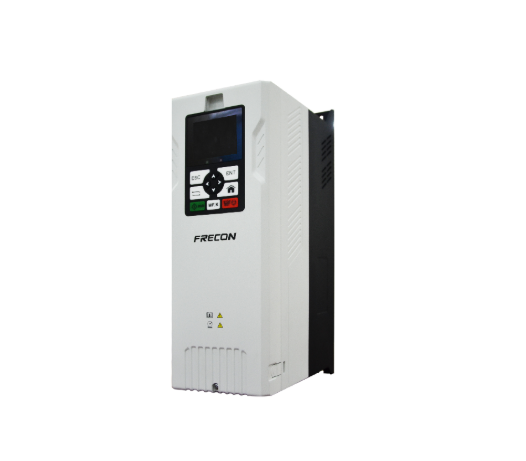
Closed-loop process control can be particularly useful in pumping, ventilation, and pressure-regulation systems. The FR30 Series High Performance Inverter includes an adaptive PID function module with sleep and wake functions triggered by frequency-related conditions, multiple feedback-source selections, and dual PID parameter sets that can switch according to load or deviation. Such functions can support changing process demands, although sensor configuration, setpoints, switching logic, and restart behavior must be validated during commissioning.
Verify Safety Functions and System Compatibility
Functional safety must be assessed at the system level rather than inferred from a product label. A STO inverter incorporates Safe Torque Off when the relevant function is provided and appropriately implemented. STO prevents the drive from producing torque under specified conditions, but it does not provide electrical isolation and does not necessarily stop a motor quickly; the motor may coast according to its load and mechanics.
Engineers should confirm the safety function’s documentation, required performance level or SIL where applicable, wiring method, and compatibility with the machine’s safety architecture. Emergency-stop circuits, guards, interlocks, and maintenance isolation procedures must be designed around the hazards identified in the risk assessment. STO should be treated as one safety measure within that broader design.
Electrical integration also affects dependable operation. Check supply voltage, grounding, short-circuit protection, electromagnetic compatibility, cable routing, and motor-cable length. Long cable runs may require output reactors or filters, depending on the drive, motor insulation, and installation. FRECON’s FR30 Series product information states that the series complies with CE certification standards; procurement teams should still review the declaration and applicable documentation for the exact model and intended installation.
Examine Environmental Durability and Maintenance Needs
Industrial environments expose electronic drives to heat, dust, vibration, humidity, and electrical disturbances. These conditions can shorten component life when the equipment is installed outside its specified operating limits. Review enclosure requirements, cooling arrangements, mounting clearances, ambient-temperature limits, and any derating guidance before finalizing cabinet dimensions.
A compact installation is useful only if heat can escape and technicians can reach components for inspection. Restricted airflow or dust buildup may increase internal temperatures, while vibration can affect mounting hardware and electrical connections. Planned cleaning, temperature checks, and inspection of cooling components can help identify developing issues before they interrupt production.
Documentation is another practical measure of long-term reliability. Record motor nameplate values, control parameters, wiring diagrams, safety configurations, and fault history. Standardized records make replacement and recommissioning easier, particularly when several machines share similar drive settings. Spare-parts availability and access to technical support should also factor into procurement decisions for equipment whose failure would interrupt critical operations.
Conclusion
Reliable drive selection depends on matching control performance, safety architecture, and environmental tolerance to the machine’s operating conditions. A sensorless vector solution may offer useful torque control without an encoder, while a smart electric drive can simplify process integration when its functions align with actual requirements.
For applications that require torque-disable functionality, a STO inverter must be evaluated against the machine’s documented safety needs rather than treated as a stand-alone safety solution. At FRECON, we encourage a specification-led approach that combines careful model verification with sound installation and commissioning practices.