Expanding an off-grid power system often seems straightforward: add another inverter and increase the available capacity. In practice, parallel operation depends on the equipment’s internal control design, communication capability, and compatibility with the existing installation.
Buyers evaluating a wholesale off grid solar inverter should distinguish between units designed for standalone operation and models explicitly engineered to synchronize with other inverters. At FRECON, we believe understanding these differences before procurement helps distributors and system integrators avoid costly design changes later.
Understand What Parallel Operation Requires
Parallel operation allows multiple inverters to work together to supply a shared electrical load. Depending on the system architecture, this arrangement can increase available output power, provide additional capacity for peak demand, or support expansion as energy requirements grow. However, connecting inverter outputs together does not automatically create a stable power system.
Each participating unit must coordinate its output voltage, frequency, and phase. Small differences between units can produce circulating currents, unstable load sharing, or protective shutdowns. Parallel-capable models typically use control algorithms and communication arrangements to synchronize operation and distribute load within specified limits.
Compatibility must be confirmed at the model level. Two inverters with similar power ratings may use different synchronization protocols or support different numbers of parallel units. Before ordering equipment, check the manufacturer’s documentation for approved combinations, maximum unit count, firmware requirements, communication cables, and installation instructions.
Check the Specifications Before Bulk Purchasing
A distributor working with an off-grid solar inverter manufactuer should request clear technical documentation rather than relying on general product descriptions. The specification should state whether parallel operation is supported, which models can operate together, and whether additional accessories or configuration procedures are required. This information also helps installers distinguish genuine parallel functionality from features such as dual AC outputs or multiple operating modes.
Electrical ratings deserve careful review. Confirm continuous output power, surge capacity, rated voltage, frequency, and the type of loads the system must supply. Motors, refrigeration compressors, and pumps can draw substantial starting current, so the combined nominal ratings of several inverters may not fully describe the system’s ability to start demanding equipment.
Battery compatibility is another important consideration. Parallel inverters may share a battery bank, but the battery voltage, allowable current, cable sizing, protection devices, and battery-management-system communication must follow the approved design. Unequal cable resistance or unsuitable battery limits can affect current distribution and reduce system stability, even when the inverters themselves support parallel operation.
Distinguish Output Quality From Parallel Capability
Output waveform quality and synchronization are separate technical properties. A pure sine wave off grid solar inverter produces an AC waveform suitable for many household appliances, electronics, and motor-driven equipment. That characteristic describes the shape of its output; it does not establish whether the inverter can synchronize with another unit.
Parallel systems need coordinated control in addition to suitable waveform quality. The units must maintain compatible voltage and frequency while responding to changing loads. If one inverter attempts to regulate the shared output differently from the others, the system may experience uneven load sharing or repeated protection events.
Buyers should also check whether the manufacturer specifies parallel operation for the intended output configuration. Some products provide dual output terminals for separating priority and non-priority loads, but separate terminals are not equivalent to parallel synchronization. Product documentation should make the distinction clear so installers do not mistake an output-distribution feature for an expansion capability.
Evaluate Product Features Against System Needs
Off-grid installations vary widely, from small cabins to farms, workshops, and remote commercial sites. A system serving lighting and communications may require little expansion capacity, while a site running pumps or refrigeration equipment may need careful planning for motor starts and changing demand. Defining the load profile first makes it easier to decide whether parallel operation is necessary at all.
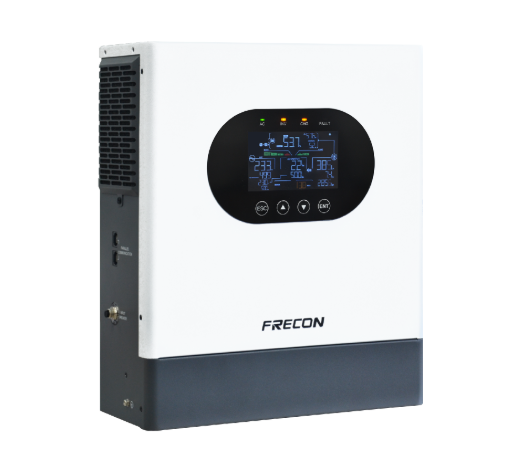
For buyers considering FRECON equipment, the SP200 Solar Hybrid Inverter is specified with dual output terminals and a maximum PV input voltage of up to 500 V. These features can inform decisions about solar-array configuration and load distribution, but they do not by themselves confirm parallel capability. Procurement teams should consult the relevant model documentation to verify supported operating modes, rated output, and any approved expansion arrangement before selecting it for a multi-inverter installation.
Commercial purchasing also benefits from a structured verification process. Ask for wiring diagrams, installation manuals, protection requirements, communication specifications, and confirmation of compatible models. Where a project depends on parallel operation, obtain explicit written confirmation for the intended configuration rather than inferring support from a product family name or sales description.
Conclusion
Parallel operation is a defined system capability, not a standard feature of every off-grid inverter. A wholesale off grid solar inverter should be assessed for synchronization and load-sharing support, while an off-grid solar inverter manufactuer should provide model-specific documentation for the intended configuration.
Likewise, a pure sine wave off grid solar inverter may provide suitable AC power without necessarily supporting parallel connections. At FRECON, we recommend verifying these distinctions before purchase so that equipment selection, installation design, and future expansion remain aligned with the project’s actual requirements.