Fluctuating household demand, changing sunlight, and intermittent grid access can all affect solar power performance. In a single phase solar system, stable output depends not only on the panels and batteries but also on how the inverter manages energy conversion and load changes.
At FRECON, we recognize that understanding these interactions helps system designers make better technical decisions. Selecting suitable equipment requires more than comparing rated power; control behavior, phase compatibility, overload capacity, and system configuration all influence day-to-day reliability.
How Inverter Control Affects Power Stability
Solar generation rarely remains constant throughout the day. Passing clouds can reduce photovoltaic output within seconds, while appliances such as refrigerators, pumps, and air conditioners may draw a sudden surge of current when starting. The inverter must respond to these changing conditions without allowing output voltage or frequency to drift beyond acceptable limits.
Voltage regulation is especially important in residential applications. If the inverter cannot respond effectively to sudden changes in demand, sensitive electronics may experience interruptions or malfunction. Frequency stability also matters because many electrical devices are designed to operate within a defined frequency range. Effective control systems monitor operating conditions and adjust conversion behavior to keep the output within specified limits.
Battery integration adds another layer of control. During periods of weak sunlight, stored energy can support household loads when the battery has sufficient charge and discharge capability. However, stability still depends on battery voltage, current limits, inverter settings, and the total power demanded by connected equipment. Correctly matching these components helps prevent avoidable shutdowns and excessive cycling.
Matching Inverter Capacity to Household Demand
Rated output power provides a useful starting point, but it does not tell the whole story. Household equipment often has different operating patterns: lighting and electronics may draw relatively steady power, whereas compressors and electric motors can demand several times their normal running current during startup. An inverter must accommodate these temporary peaks without exceeding its short-term overload rating.
System designers should distinguish between continuous output power and surge capacity. Continuous output describes the power available under specified operating conditions, while surge ratings indicate whether the unit can handle brief increases in demand. The duration of the overload rating matters as much as its numerical value, particularly when multiple motor-driven appliances may start close together.
Load planning should also account for simultaneous use. Rather than adding only the nameplate ratings of individual devices, installers can examine realistic operating scenarios and identify combinations that may exceed available capacity. A single phase solar system designed around actual demand patterns can avoid unnecessary oversizing while retaining sufficient operating margin. Cable sizing, protective devices, ambient temperature, and installation conditions should be checked alongside inverter specifications.
Why Parallel Operation Requires Careful Design
Some installations need more capacity than one inverter can provide, or they may require a different output configuration as demand grows. Parallel operation can address these requirements, but compatibility must be explicitly supported by the manufacturer. Units that are not designed to coordinate may develop uneven load sharing, circulating currents, synchronization problems, or protective shutdowns.
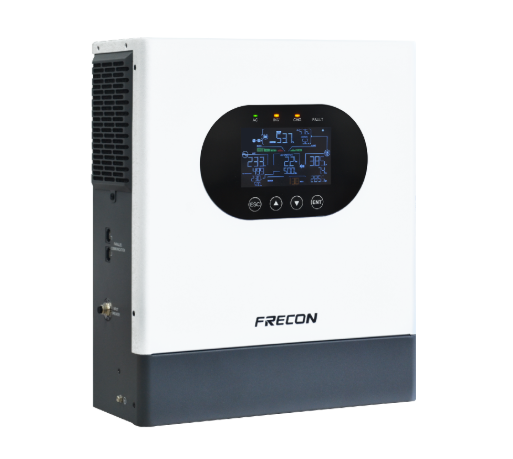
The SP200 Solar Hybrid Inverter supports parallel operation of up to nine units. Three or more units can be configured to form a three-phase 380 VAC output, according to the stated product specifications. This flexibility can help accommodate projects whose capacity or phase requirements exceed the capabilities of a single unit. The intended configuration, wiring arrangement, firmware compatibility, and commissioning procedure must still follow the manufacturer's documentation; the parallel rating alone does not establish suitability for every installation.
Anyone evaluating an off-grid solar inverter manufactuer should ask for clear documentation covering supported parallel quantities, communication requirements, phase configuration, and fault response. Installers should also verify whether the intended system requires single-phase output or a three-phase supply. Parallel capability does not automatically mean that every combination of units can create every output configuration.
Battery, Solar Input, and Protection Coordination
Inverter stability depends on the energy available at its inputs as well as the power demanded at its output. Photovoltaic array sizing should remain within the inverter's permitted voltage and current ranges across expected weather conditions. Cold temperatures can raise panel open-circuit voltage, so designers need to check the maximum possible string voltage rather than relying solely on nominal operating values.
Battery selection deserves similar attention. Voltage compatibility, usable capacity, continuous discharge current, and peak discharge limits all affect how reliably stored energy can support sudden demand. If the battery management system disconnects because of excessive current or low voltage, the inverter may lose its energy source even when the solar array is producing power. Communication settings and charging parameters should therefore match the battery manufacturer's requirements.
Protection and installation quality complete the picture. Appropriate grounding, overcurrent protection, surge protection, ventilation, and correctly sized conductors reduce electrical risks and help equipment operate within its intended limits. A best hybrid solar inverter for one household may not suit another if their battery arrangement, climate, load profile, or backup requirements differ. Product evaluation should focus on documented operating limits and system compatibility rather than a single headline specification.
Conclusion
Stable solar power emerges from the interaction of sound system design, responsive inverter controls, suitable storage, and realistic load planning. Before specifying a single phase solar system, assess continuous demand, startup surges, battery performance, and the need for future expansion. An off-grid solar inverter manufactuer should be able to provide clear technical documentation so installers can verify compatibility and configure the system safely.
At FRECON, we believe that evaluating a best hybrid solar inverter means looking beyond nominal power ratings to understand how the equipment behaves under changing conditions. Careful matching and commissioning give households a more reliable foundation for using solar energy across different operating scenarios.