Reliable electricity can transform rural communities, supporting irrigation, small businesses, healthcare facilities, and household needs without relying entirely on distant utility networks. As distributed energy projects expand, the single phase solar inverter is gaining attention for applications where loads are modest and most consumers use conventional single-phase appliances.
At FRECON, we see rural electrification as an engineering challenge shaped by local demand, available sunlight, maintenance resources, and long-term affordability. The right system architecture depends on how communities consume electricity, not simply on how much solar capacity can be installed.
Why Rural Microgrids Need Flexible Power Conversion
Rural communities often have electricity needs that differ significantly from those of cities. Homes may use lighting, fans, phone chargers, televisions, and small refrigeration units, while farms and workshops introduce pumps, tools, and other motor-driven equipment. Since demand can vary sharply throughout the day, microgrid planners must understand both average consumption and short periods of high power use.
Single-phase distribution can suit small clusters of homes or individual buildings with relatively modest demand. It may also simplify wiring in locations where three-phase machinery is uncommon. However, growing communities may eventually need three-phase distribution for larger pumps, processing equipment, or workshops, making future expansion an important part of the original design.
Solar generation introduces another variable: output changes with cloud cover, season, and daylight hours. Batteries can bridge some of these gaps, but storage capacity and inverter ratings must match the community's actual consumption. Load surveys, appliance inventories, and seasonal demand estimates provide a stronger basis for system sizing than population figures alone.
How Compact Equipment Can Simplify Remote Installations
Transporting electrical equipment to remote villages may involve unpaved roads, limited storage facilities, and long journeys from service centers. Smaller equipment can reduce handling difficulties and help installers work within restricted spaces, although compact dimensions should never take priority over electrical ratings, ventilation, or safe access for maintenance.
A compact solar inverter is most useful when its physical footprint fits the installation while its electrical performance meets local requirements. Designers should compare rated output, overload capability, conversion efficiency, environmental limits, and available protection functions. Dust, humidity, high temperatures, and unstable battery conditions can all affect equipment performance, so the installation environment deserves careful assessment.
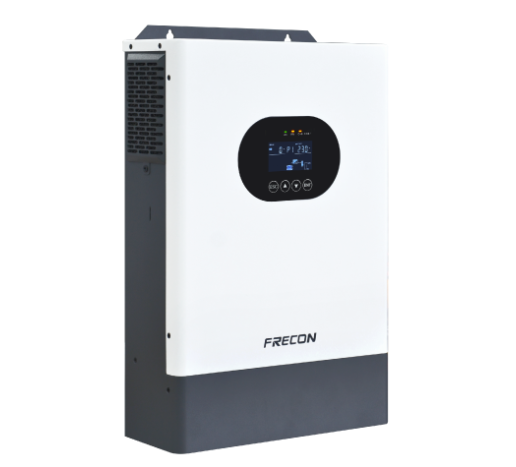
The SP100 Solar Hybrid Inverter illustrates several features that may be relevant to decentralized solar projects. Its has a built-in Wi-Fi module for mobile app monitoring, configurable grid-versus-PV priority, a wide PV input voltage range, lithium battery activation, and operation without a battery. We also notes that PV feed-in to the grid is subject to local policies, while EPS load output is available only on the specified SP100-6500-48 and SP100-12000-48 models. Project teams should check the exact model specifications before selecting equipment.
Choosing Between Single-Phase and Three-Phase Architectures
The electrical structure of a rural microgrid should reflect the types of loads it will serve. Single-phase systems may be suitable for households and small shops, particularly when the combined demand remains within the inverter's continuous and surge ratings. Motor startup current requires special attention because pumps and refrigeration compressors can briefly draw much more power than they use during normal operation.
Three-phase distribution becomes more relevant when a community depends on larger motors, agricultural processing, or equipment designed for balanced three-phase supply. Such infrastructure can support a different range of loads, but it also requires suitable protection, distribution equipment, and technical expertise. Installing more capacity than the community needs can raise costs without delivering meaningful benefits.
Procurement decisions should consider whether the selected equipment can support the intended configuration, backup strategy, and future growth. A high frequency solar inverter may use high-frequency power-conversion stages to reduce transformer size and equipment weight, depending on its design. Buyers should still examine the manufacturer's efficiency data, thermal limits, surge performance, and output waveform rather than assuming that topology alone determines suitability.
Monitoring, Maintenance, and Community Reliability
An effective microgrid needs more than a successful installation. Operators must understand how to identify abnormal battery behavior, excessive demand, cooling problems, and declining solar production. Basic monitoring can reveal patterns such as repeated overloads during evening hours or unexpectedly low battery charge before sunrise, allowing adjustments to schedules or load management.
Remote monitoring can be especially useful when technicians cannot visit the site frequently. However, connectivity may be unreliable in rural areas, so equipment should also provide practical local status indicators and clear fault information. Maintenance plans should specify who checks connections, cleans equipment where appropriate, reviews alarms, and arranges qualified repairs.
Training local operators improves the long-term value of the installation. Simple operating procedures, clear documentation, spare-parts planning, and realistic service arrangements can prevent minor faults from becoming prolonged outages. System designers should also consider whether critical loads, such as clinic refrigeration or communications equipment, need dedicated backup arrangements rather than relying solely on the general community supply.
Conclusion
Rural microgrids are not adopting one inverter configuration universally; their choices depend on demand, distribution plans, operating conditions, and available technical support. A single phase solar inverter can serve modest loads effectively when its capacity and protection settings match the installation.
Transport and installation may be simplified by a compact solar inverter, while a high frequency solar inverter can offer a smaller conversion design depending on its construction. At FRECON, we believe practical rural electrification starts with understanding community needs and selecting equipment against verifiable technical requirements, with enough flexibility to accommodate future changes in electricity use.