Remote farms often face a practical energy challenge: irrigation, livestock care, refrigeration, and monitoring equipment need reliable electricity, yet extending utility lines across large rural areas can be expensive. An off grid MPPT solar inverter offers one way to convert solar energy into usable power while managing energy from photovoltaic panels.
At FRECON, we believe agricultural energy decisions should start with the realities of farm operations, including seasonal demand, local weather, equipment startup loads, and access to maintenance. Understanding these factors helps growers assess whether an independent solar power system fits their land and budget.
Reducing Dependence on Remote Grid Connections
Farm buildings, wells, greenhouses, and livestock facilities may sit far from existing distribution networks. Connecting these sites to the grid can involve lengthy cable runs, infrastructure approvals, and recurring electricity expenses. Standalone solar systems provide another option, particularly where sunlight is plentiful and daily loads can be planned around available generation.
Energy independence does not mean every farm can operate on solar power without careful preparation. Irrigation pumps may run for extended periods during dry weather, while cold storage and ventilation systems may need electricity overnight. Farm owners should document the power ratings, operating hours, and seasonal use of essential equipment before deciding on system capacity.
Backup planning also matters. Battery storage can supply electricity after sunset or during cloudy periods, but the required capacity depends on how long critical loads must operate without meaningful solar input. Some farms may benefit from keeping a generator for prolonged periods of poor weather or unusually high demand. Comparing these options against fuel availability, maintenance costs, and outage consequences gives farmers a more realistic view of long-term operating expenses.
How MPPT Improves Solar Energy Harvesting
Photovoltaic panels have a power output that changes with sunlight intensity, cell temperature, and electrical loading. Their maximum power point is the operating voltage and current combination at which they produce the greatest available power under current conditions. Maximum power point tracking, commonly called MPPT, continually adjusts the operating point to make better use of the array's available energy.
This function is particularly useful on farms because solar conditions can change throughout the day. Morning temperatures, midday heat, passing clouds, and partial shading from nearby structures may alter panel output. MPPT control can respond to these variations, although actual energy gains depend on array design, shading patterns, controller performance, and the reference conditions used for comparison.
Farmers should also distinguish MPPT capability from overall system efficiency. Panel orientation, wiring losses, dust accumulation, and inverter conversion losses all influence the electricity ultimately available to equipment. An off grid MPPT solar inverter cannot compensate for an undersized array or neglected panels; it works best as part of a well-designed solar installation.
Selecting Equipment for Demanding Farm Environments
Agricultural installations often operate in locations exposed to dust, humidity, temperature swings, insects, and vibration. Equipment specifications should therefore be reviewed against the actual installation environment rather than indoor laboratory conditions alone. Enclosure protection, operating temperature limits, ventilation requirements, and the availability of local technical support deserve close attention.
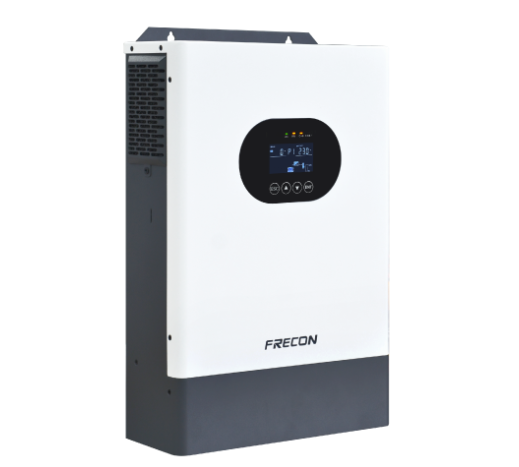
Space and transport constraints can also affect equipment selection. A compact solar inverter may simplify installation in a small pump room, equipment shed, or mobile agricultural facility, but reduced dimensions do not automatically mean better performance. Buyers should compare continuous output, surge capacity, battery compatibility, cooling design, and service access before making a decision.
High-frequency power conversion is another design consideration. Depending on the topology, a high frequency solar inverter can use smaller magnetic components than certain low-frequency designs, potentially reducing equipment weight and size. Nevertheless, the best choice depends on the loads being supplied, particularly motors that require substantial starting current. Farm operators should examine documented surge ratings and overload duration instead of relying on inverter weight or internal architecture as a substitute for performance data.
Matching Solar Capacity to Agricultural Loads
Irrigation is often among the most demanding farm applications because pump requirements depend on water depth, flow rate, pipe friction, and daily watering schedules. Before purchasing an inverter, operators should calculate pump power requirements and identify the starting method. Motor startup can briefly draw substantially more current than normal operation, so insufficient surge capability may cause protective shutdowns.
Water storage can help coordinate energy supply with demand. Where the farm's water needs and terrain allow it, pumping during strong sunlight into an elevated tank or reservoir may reduce the need to run the pump at night. This approach shifts some energy demand into daylight hours, though its practicality depends on pumping head, storage capacity, crop requirements, and water availability.
Planning for Maintenance and Long-Term Costs
The purchase price represents only one part of a farm's solar investment. Owners should estimate battery replacement, panel cleaning, electrical inspections, spare parts, and potential service visits over the expected life of the installation. Remote locations can make even routine repairs costly if compatible components or qualified technicians are difficult to access.
Monitoring tools can help identify declining solar production, unusual battery behavior, and repeated overload events before they cause extended disruption. However, digital monitoring is most useful when farm staff understand the readings and know how to respond. Simple operating instructions, fault records, and a clear maintenance schedule make the system easier to manage through busy planting and harvesting periods.
At FRECON, we encourage farm operators to evaluate solar equipment through measurable specifications and practical operating needs rather than marketing claims alone. An off grid MPPT solar inverter can be valuable where grid access is limited, but system sizing, weather patterns, load management, and maintenance planning determine whether the investment meets expectations. By comparing these factors before installation, remote farms can develop a power strategy suited to their crops, equipment, and operating conditions.