Does buying a solar inverter mean budgeting for another charge controller? Buyers selecting an off grid solar inverter can struggle to identify included charging functions. An unne cessary controller adds equipment and installation costs; a missing one leaves panels without suitable battery charging.
Understanding the built-in charger’s limits clarifies when it is enough, when external charging helps, and what an expansion requires.
When Is a Separate Charge Controller Unnecessary?
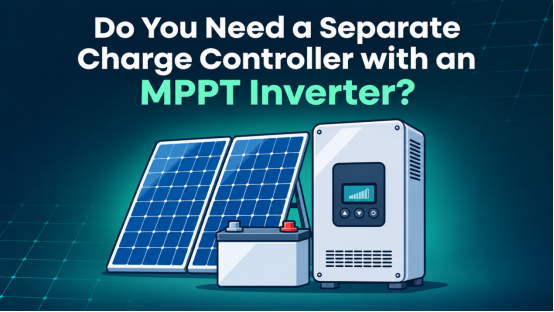
An MPPT inverter that combines DC-to-AC conversion, solar tracking and battery charging already provides the functions needed to charge batteries from PV panels. Its integrated inverter charge controller regulates this charging process. When the array stays within the permitted PV voltage, current and power limits, and the battery’s charging requirements are supported, an additional MPPT charge controller is generally unnecessary.
Using the MPPT inverter’s built-in charger also keeps the installation simpler. The panels and battery connect to the unit’s designated terminals, without a separate controller enclosure or another controller-to-battery branch. Installers therefore have fewer devices to mount and configure, and fewer external connections to complete and inspect during commissioning.
How Do You Check Whether Your MPPT Inverter Needs One?
The manual and equipment datasheets show whether an MPPT inverter’s charging functions and limits match your array, battery and expansion plans.
1. Confirm Actual Charging Functions
In the manual, find a section such as “Solar Charger” or “PV Input” and a diagram showing panels connected to designated PV terminals. The specifications should include an MPPT voltage range and solar charging current. An “AC charging current” rating only describes charging from utility or generator power; it does not confirm solar charging.
2. Check PV Input Compatibility
Use panel datasheets and the wiring plan: series-connected panels add voltage; parallel strings add current. Check that operating voltage sits within the MPPT range, while current and total panel power stay within the inverter’s limits. Open-circuit voltage—the voltage before power is drawn—must stay below the maximum PV voltage, including in cold weather, when panel voltage rises.
3. Check Battery and Charging Compatibility
Compare the inverter charge controller specifications with the battery datasheet. The bank voltage and supported chemistry must be compatible, and the charging menu must allow the required voltage settings and a current within the battery’s limit. Find the combined solar-plus-AC charging ceiling as well: it limits both sources together, rather than allowing their separate ratings to be added.
4. Check Available Tracking Channels
In the specification table, find the number of MPPTs: each is an independent tracking channel. Compare that number with arrays needing separate tracking. Different orientations or electrical configurations can produce different optimum operating points. Suitable spare channels on the MPPT solar inverter may accommodate those arrays without an external controller.
When Should You Add a Separate Charge Controller?
A separate MPPT charge controller is worth considering when existing equipment lacks the charging function, capacity or tracking channels the project needs.
Adding solar charging to an existing system
An inverter with AC charging but no PV input needs a solar controller to charge batteries from panels.
Expanding beyond built-in capability
If new panels exceed the MPPT inverter’s PV or charging limits, a separate branch may accommodate them while retaining the inverter. Original limits still apply.
Matching or tracking separate arrays
Arrays with different characteristics or exposure can operate at different optimum voltages. A separate controller tracks them independently when built-in channels are insufficient.
Sizing charging and inversion independently
If batteries need more daily charging energy while peak AC demand stays unchanged, a separate charger can expand solar charging without replacing the inverter.
What Should You Prepare Before Adding a Separate Controller?
Adding a controller changes how solar power reaches the battery and how charging sources operate together. Preparing the system records, equipment ratings and connection plan helps establish whether the proposed expansion can work within the battery’s limits.
1. Document the system and expansion target
Record the MPPT inverter model, string layout, battery data and charging sources. Define added PV capacity and the charging shortfall.
2. Select controller specifications and supporting equipment
Match startup voltage, MPPT range and PV input limits to the new array, then battery voltage, chemistry and charging current. Specify rated cables, isolation and protection.
3. Confirm connections and coordinated charging
Plan separate PV branches and battery connections. Align inverter charge controller settings; keep combined current from all sources within battery limits. A qualified installer must verify charging and protection during commissioning.
Internal settings on the MPPT inverter do not automatically limit an external charger.
Which MPPT Inverter Can Simplify Your Solar Charging Setup?
When the checks above show that integrated charging is sufficient, choosing the right inverter can avoid an external controller. The FRECON SP100 Solar Hybrid Inverter offers several configurations for matching load power, battery voltage and charging needs:
Model | Rated output | Battery voltage | Maximum PV charging current |
SP100-2000-12 | 2 kW | 12 V DC | 100 A |
SP100-3600-24 | 3.6 kW | 24 V DC | 100 A |
SP100-6500-48 | 6.5 kW | 48 V DC | 120 A |
SP100-12000-48 | 12 kW | 48 V DC | 160 A |
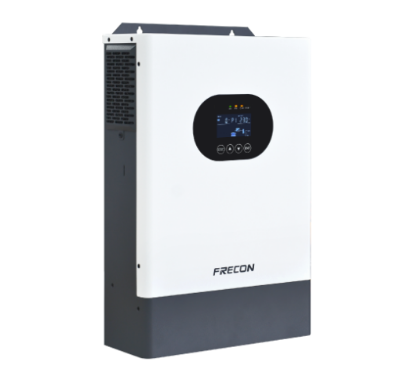
l MPPT solar charging: Built-in tracking adjusts this MPPT solar inverter’s PV operating point as sunlight changes and regulates battery charging, avoiding an external charger for compatible arrays.
l Different system configurations: Battery-voltage and charging options match different battery banks. The 12 kW model’s two MPPTs accommodate independently tracked arrays.
l Configurable grid and PV priority: Selectable source priority lets operators favour solar or utility supply to suit operating conditions.
l Wi-Fi and mobile app monitoring: Remote operating information lets operators review system status without visiting the inverter.
Match the Charging Setup to Your System
For an off grid solar inverter, an external controller is useful when it resolves a specific solar-charging limitation. When the built-in charger already supports the array, battery and tracking requirements, adding another unit brings more connections and coordination without supplying a missing function. The decision should follow the system requirements rather than a fixed equipment checklist.
For projects suited to this approach, FRECON SP100 offers an integrated MPPT solar inverter range with different battery-voltage and charging configurations. Source-priority settings and app monitoring then help operators manage supply preferences and review system status during everyday use.
Explore the SP100 range to find a configuration that fits your project.
FAQs
Does every inverter/charger include a solar charge controller?
No. An inverter/charger may combine DC-to-AC conversion with AC battery charging, without accepting solar panels directly. For an off grid solar inverter, verify built-in solar charging and dedicated PV terminals in the manual.
Can a built-in MPPT charger and a separate controller charge the same battery bank?
Yes, if both units support the battery and connection arrangement. Use separate PV arrays, align charging voltage settings and keep the combined current from all charging sources within the battery’s permitted limit.
Do panels facing different directions always need a separate controller?
No. Suitable independent MPPT channels can track differently oriented arrays separately. An external controller may help when built-in channels are unavailable or unsuitable, but each array must still meet its assigned input limits.
Does FRECON SP100 need a separate MPPT charge controller?
Normally no. SP100 is an MPPT inverter with integrated solar charging, so a separate controller is unnecessary when the selected model meets the array, battery and charging requirements. Additional charging capacity or independent tracking may justify one, after confirming compatibility.